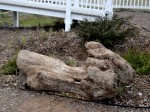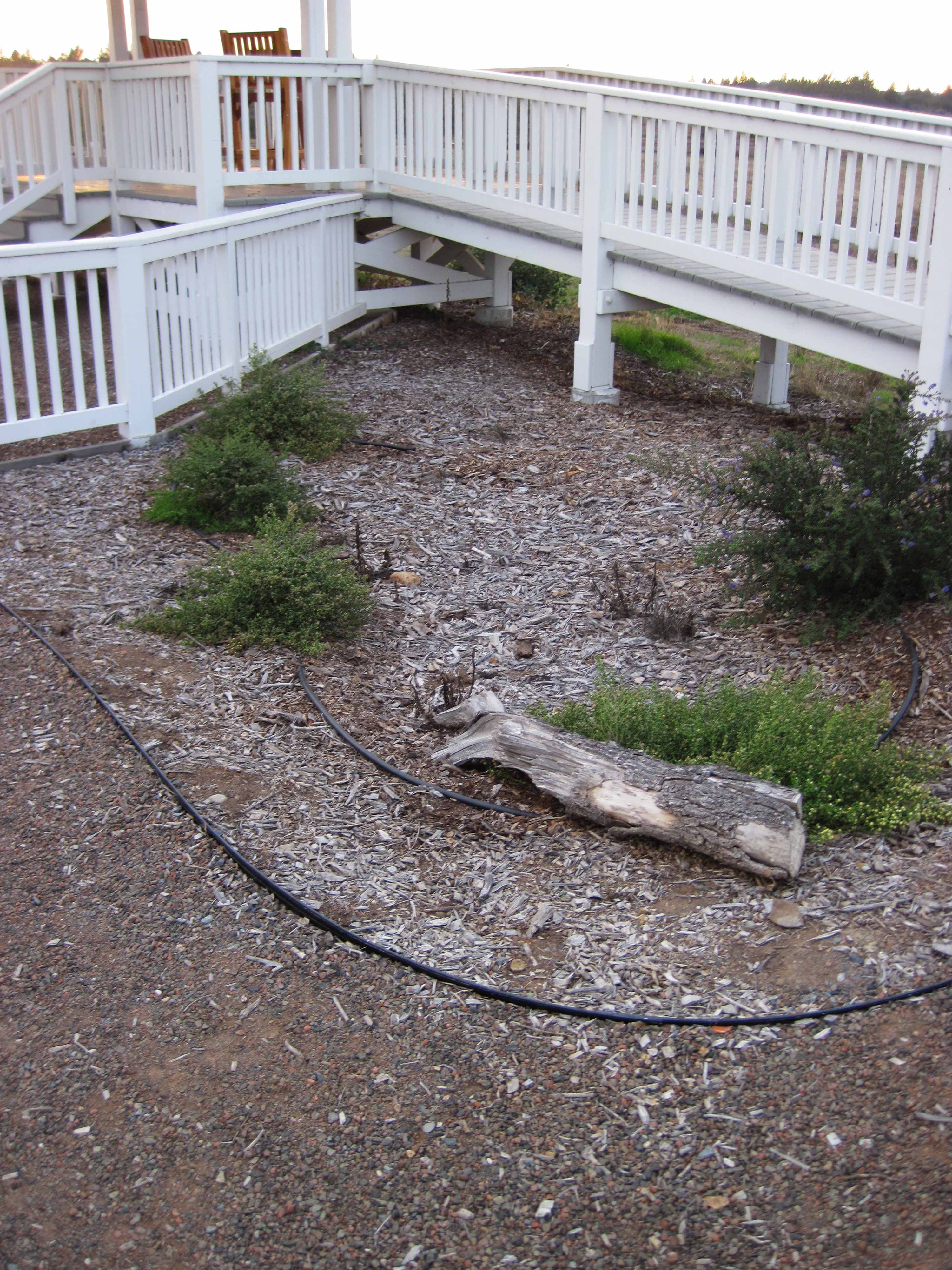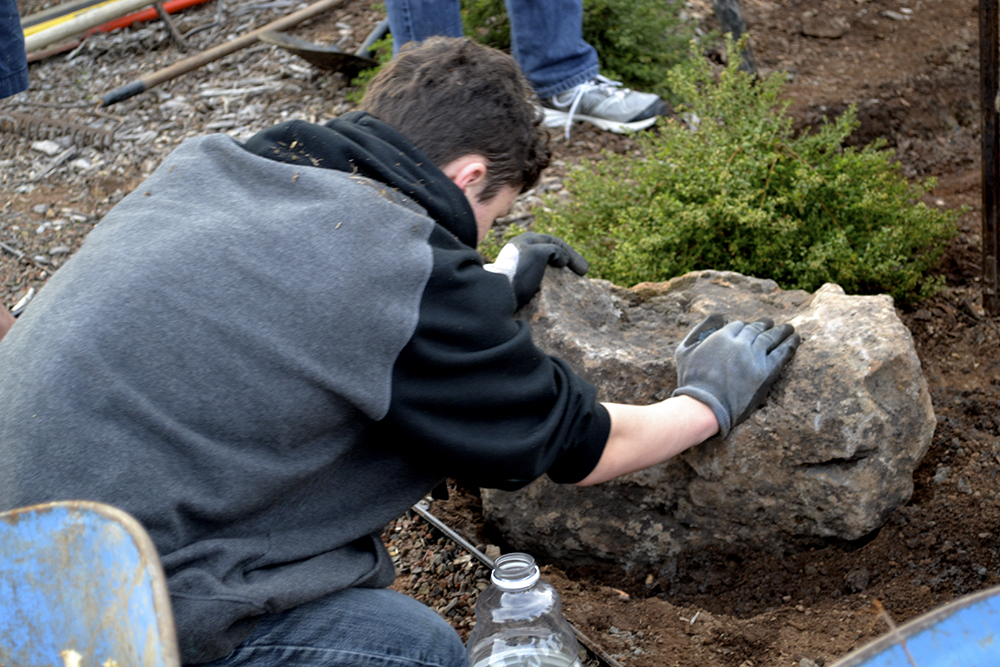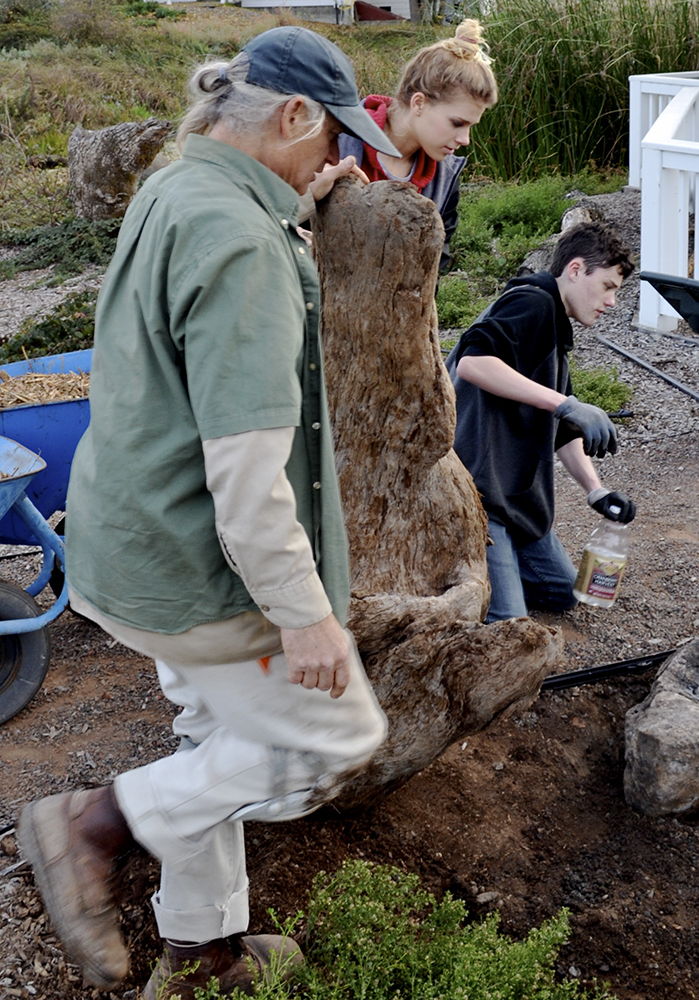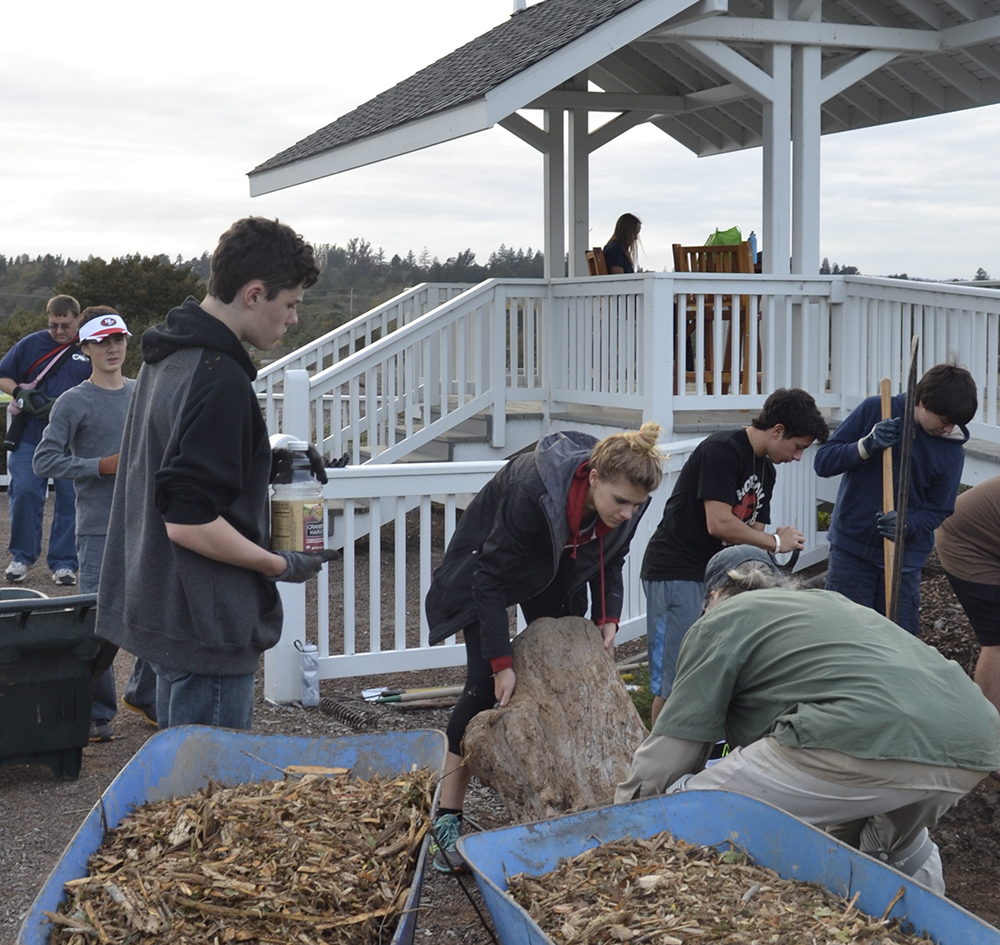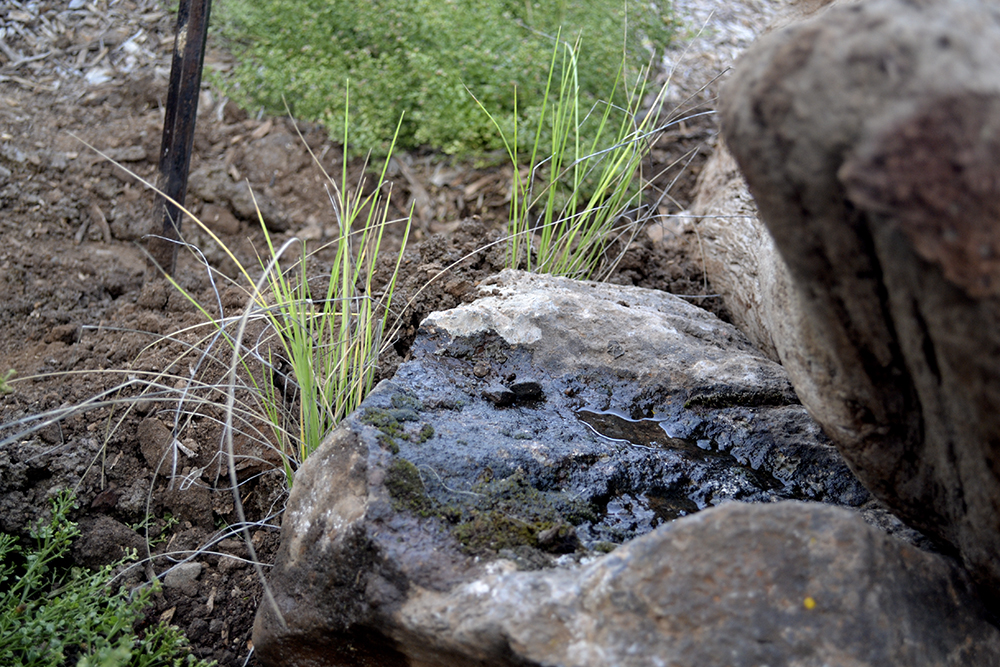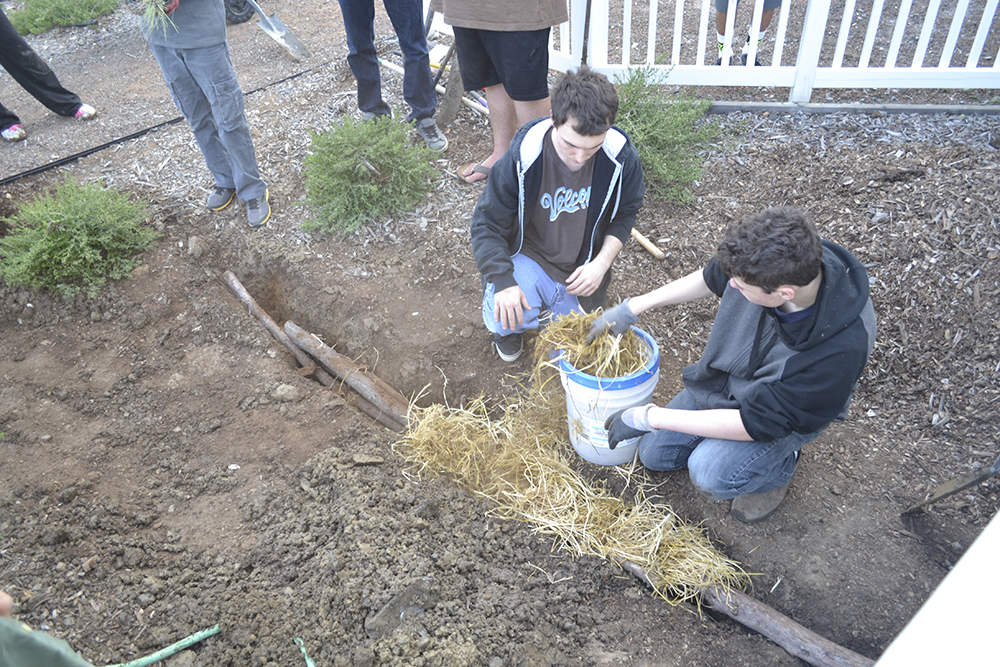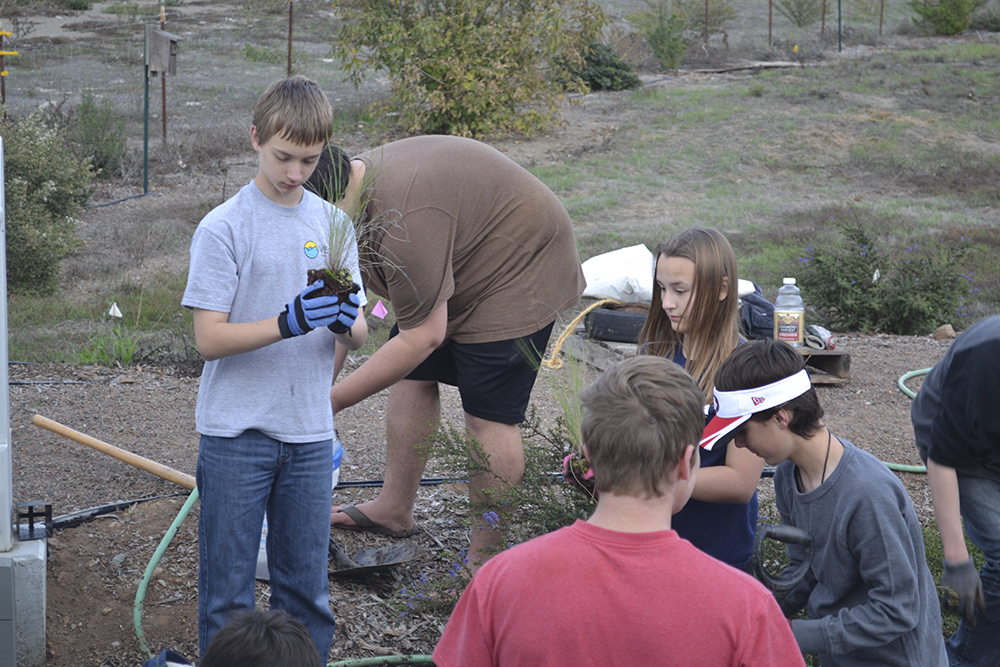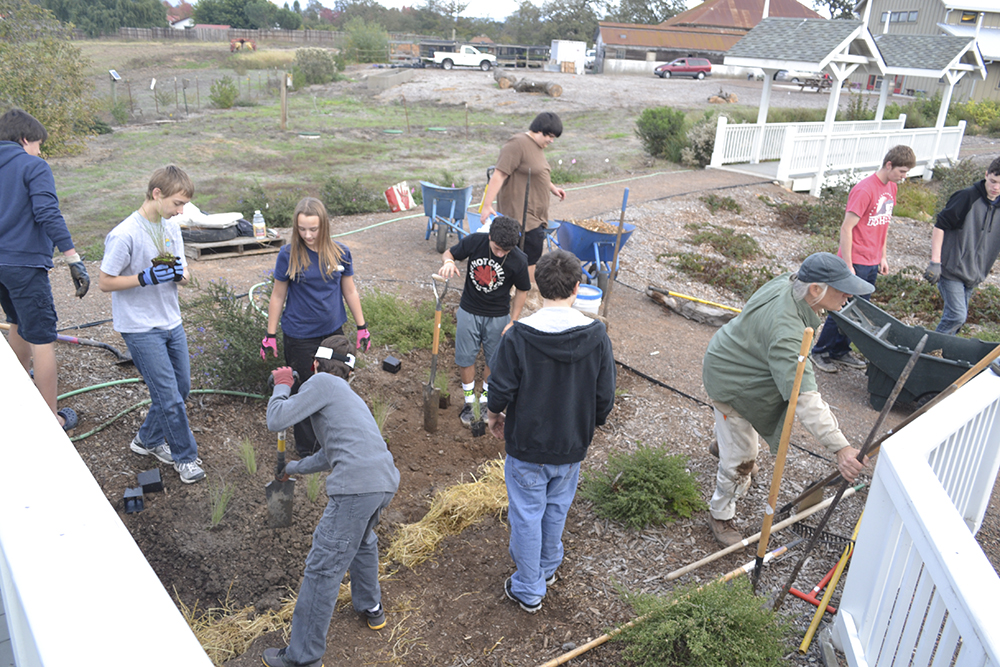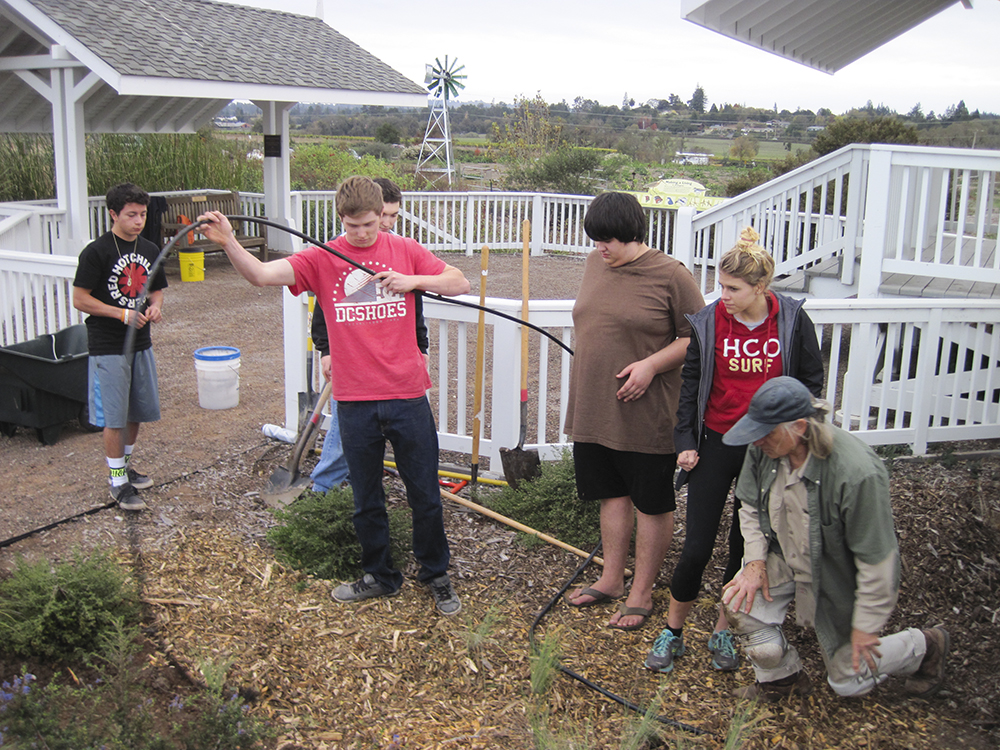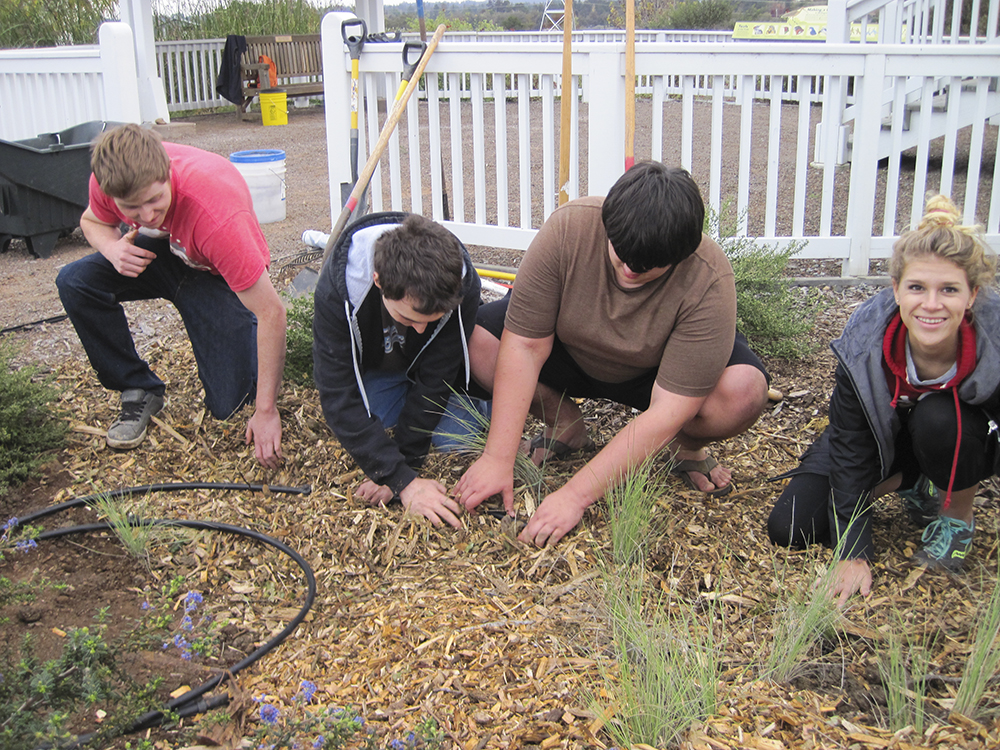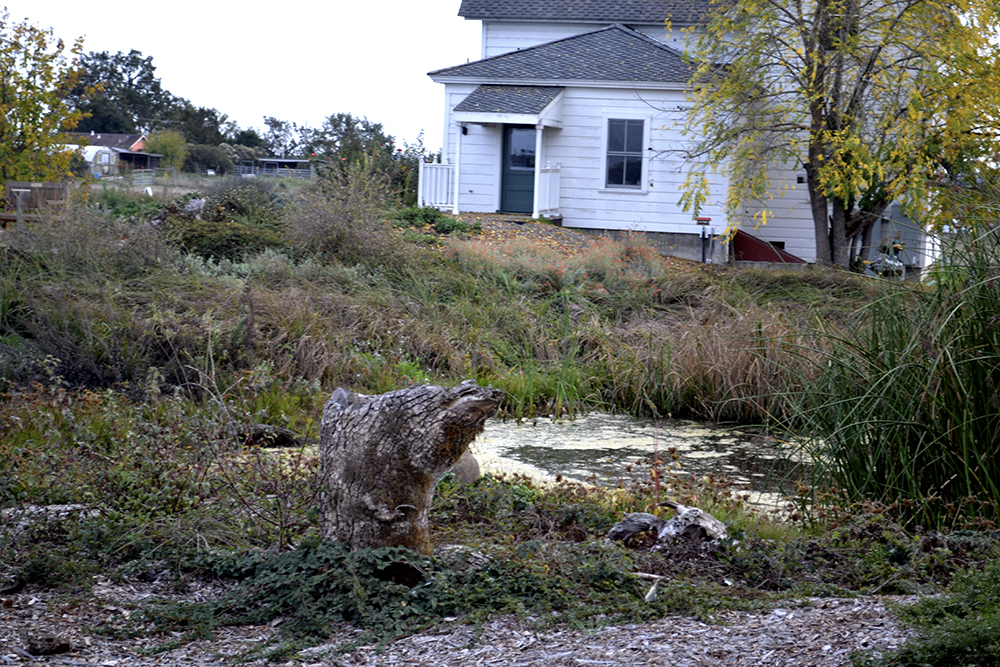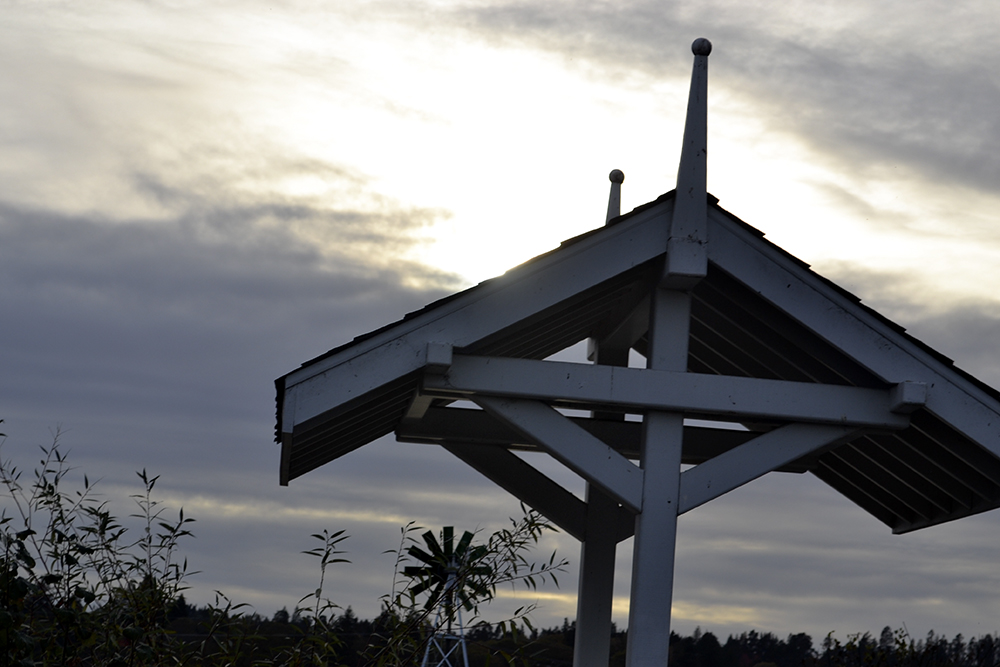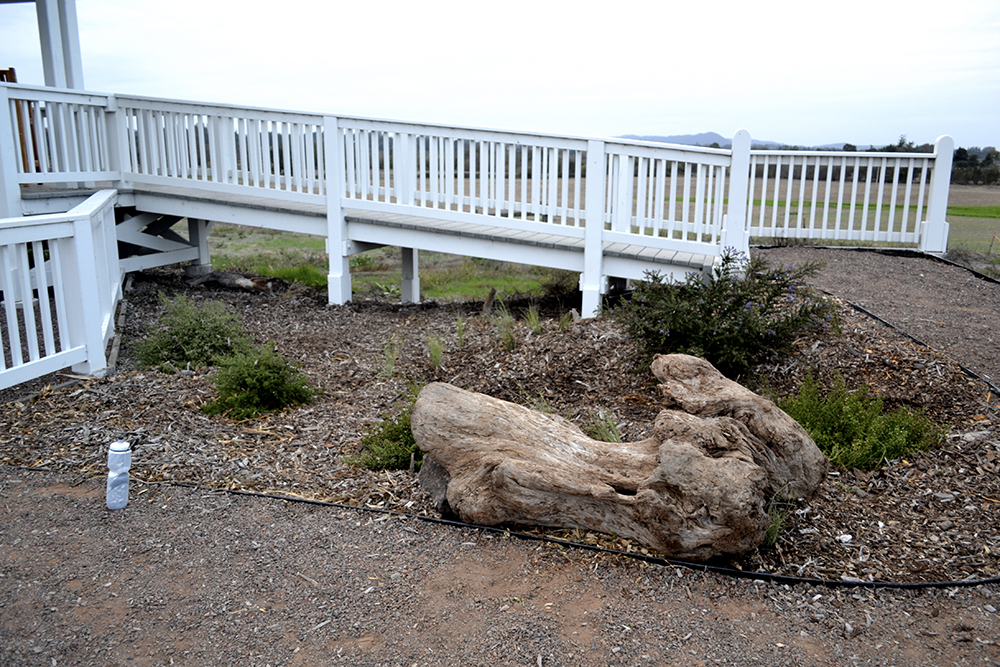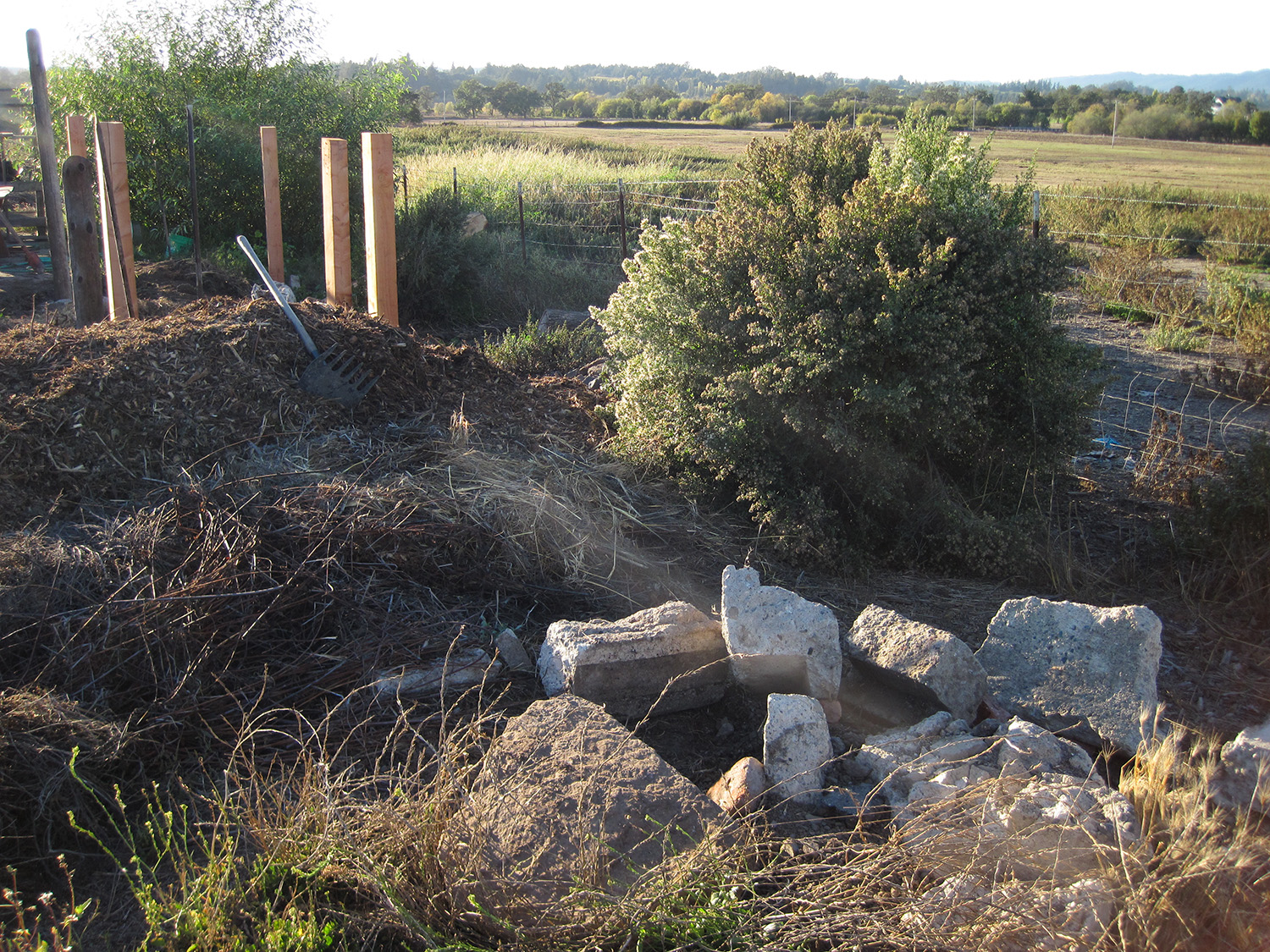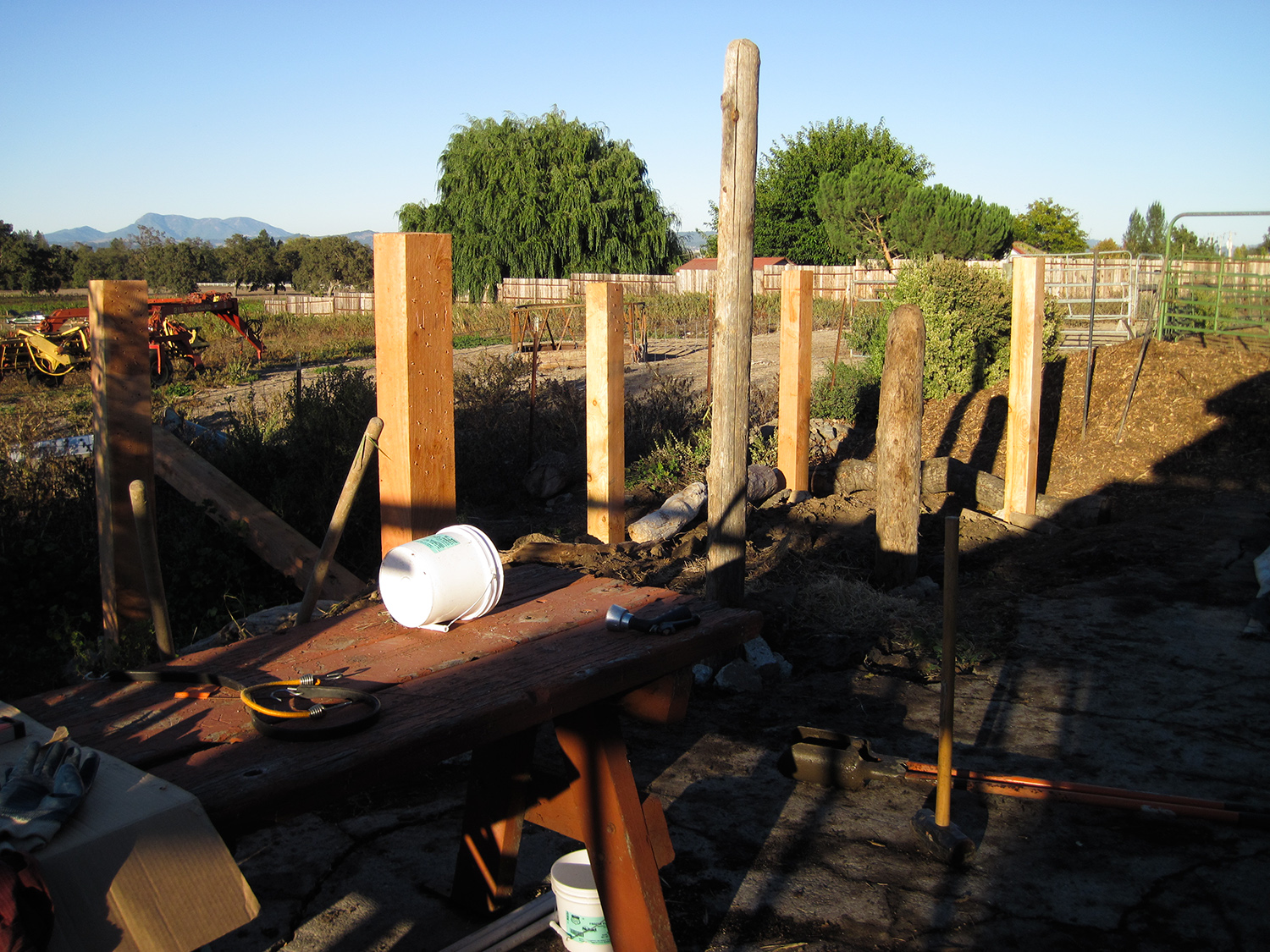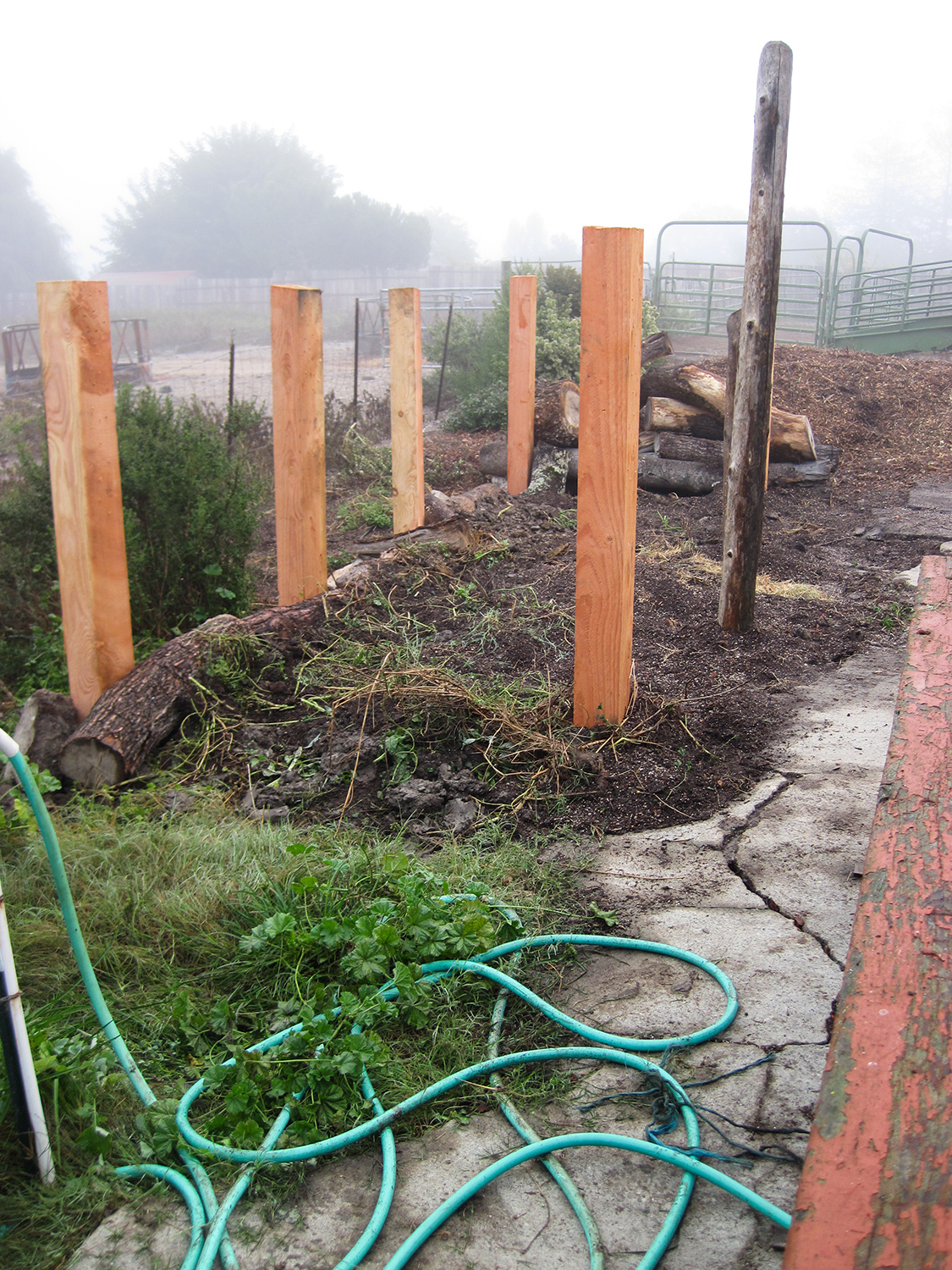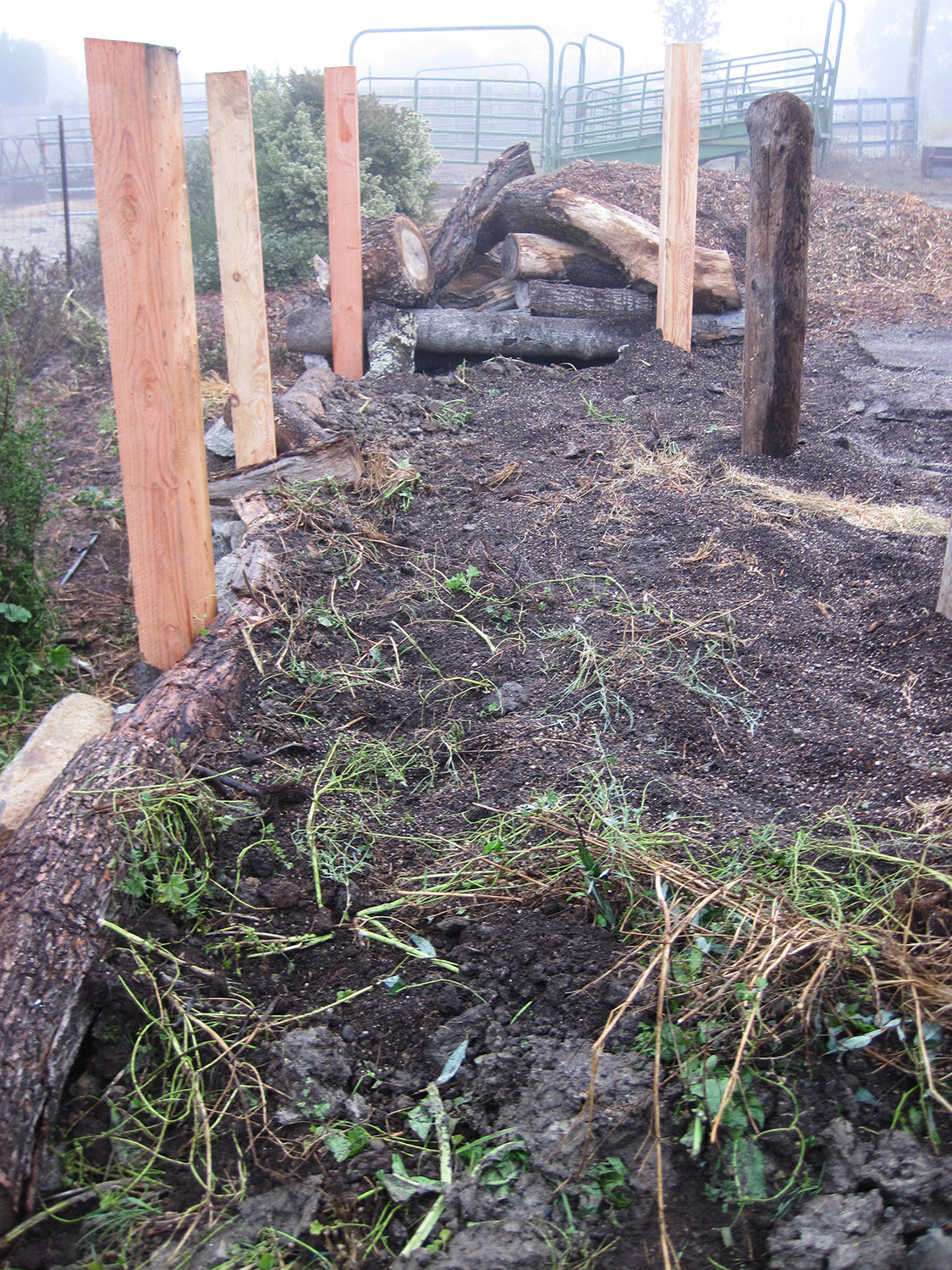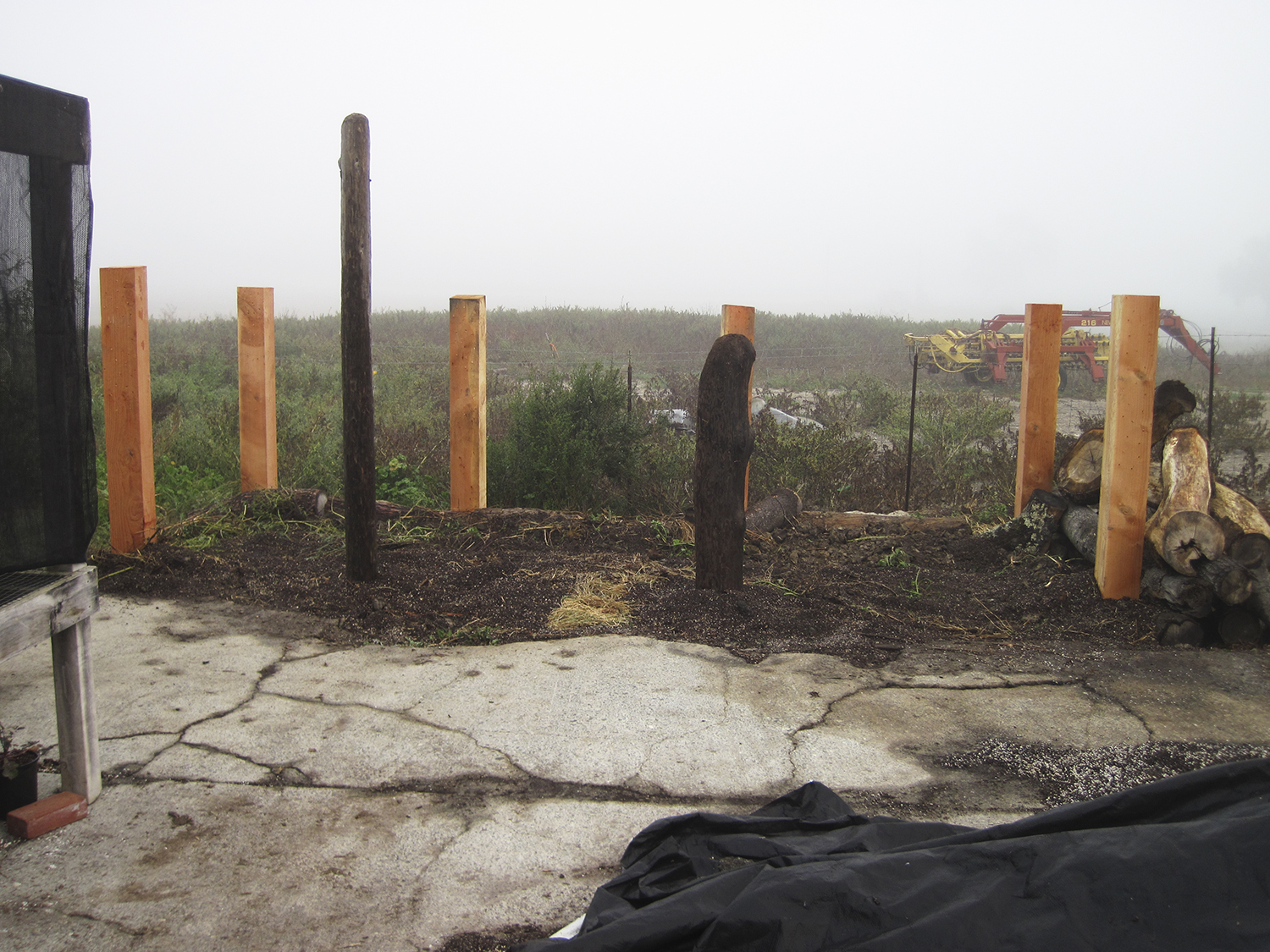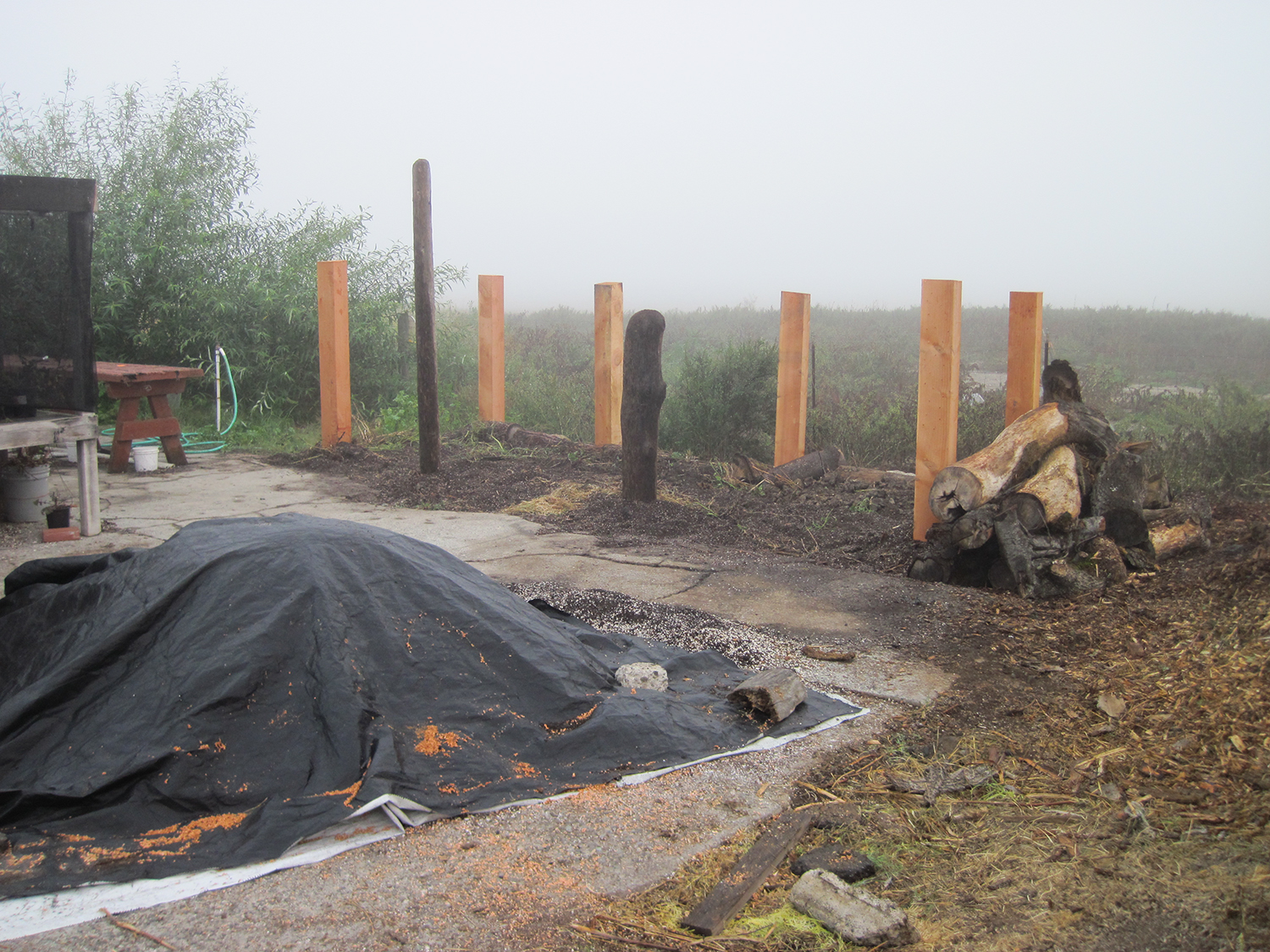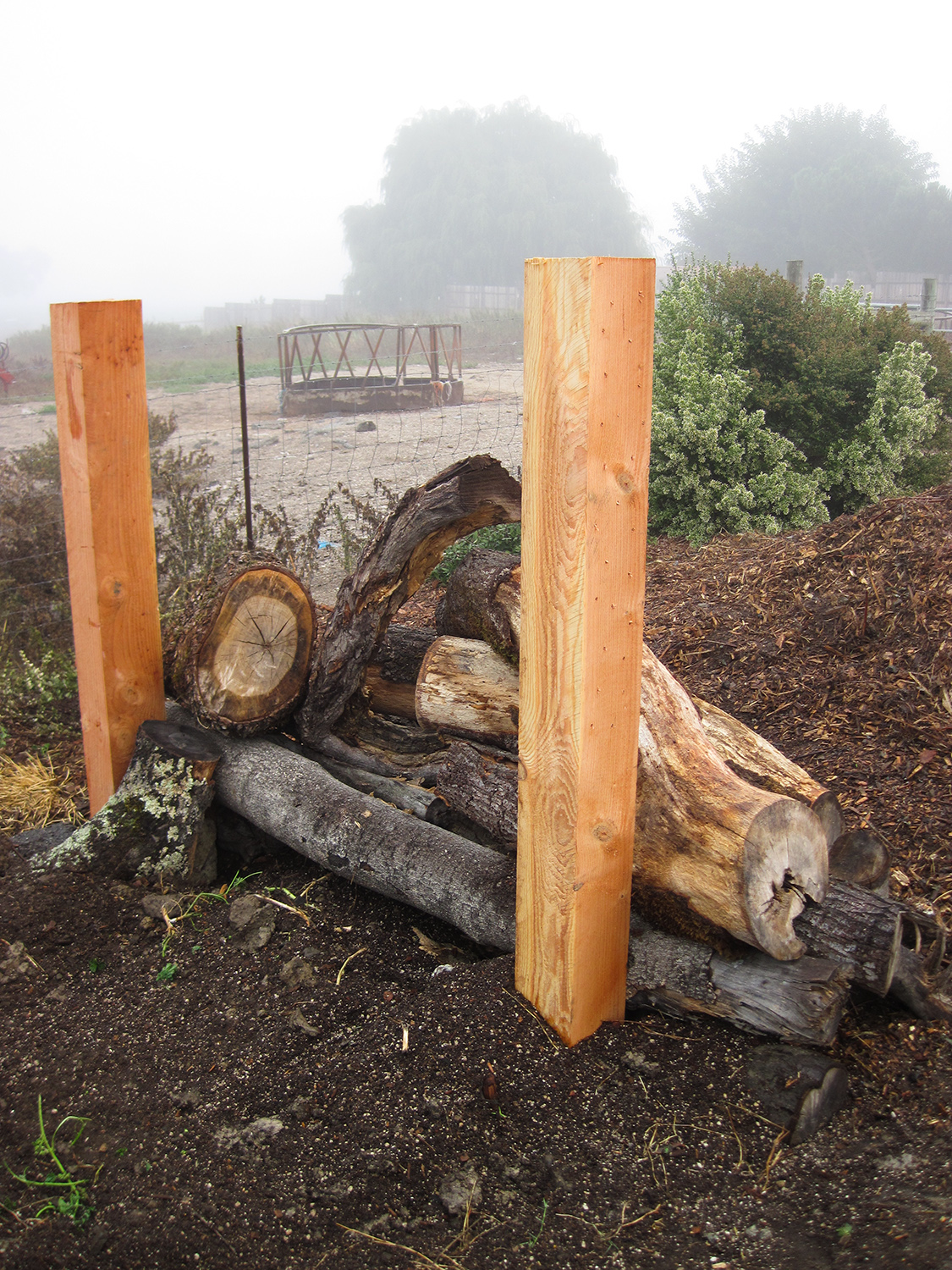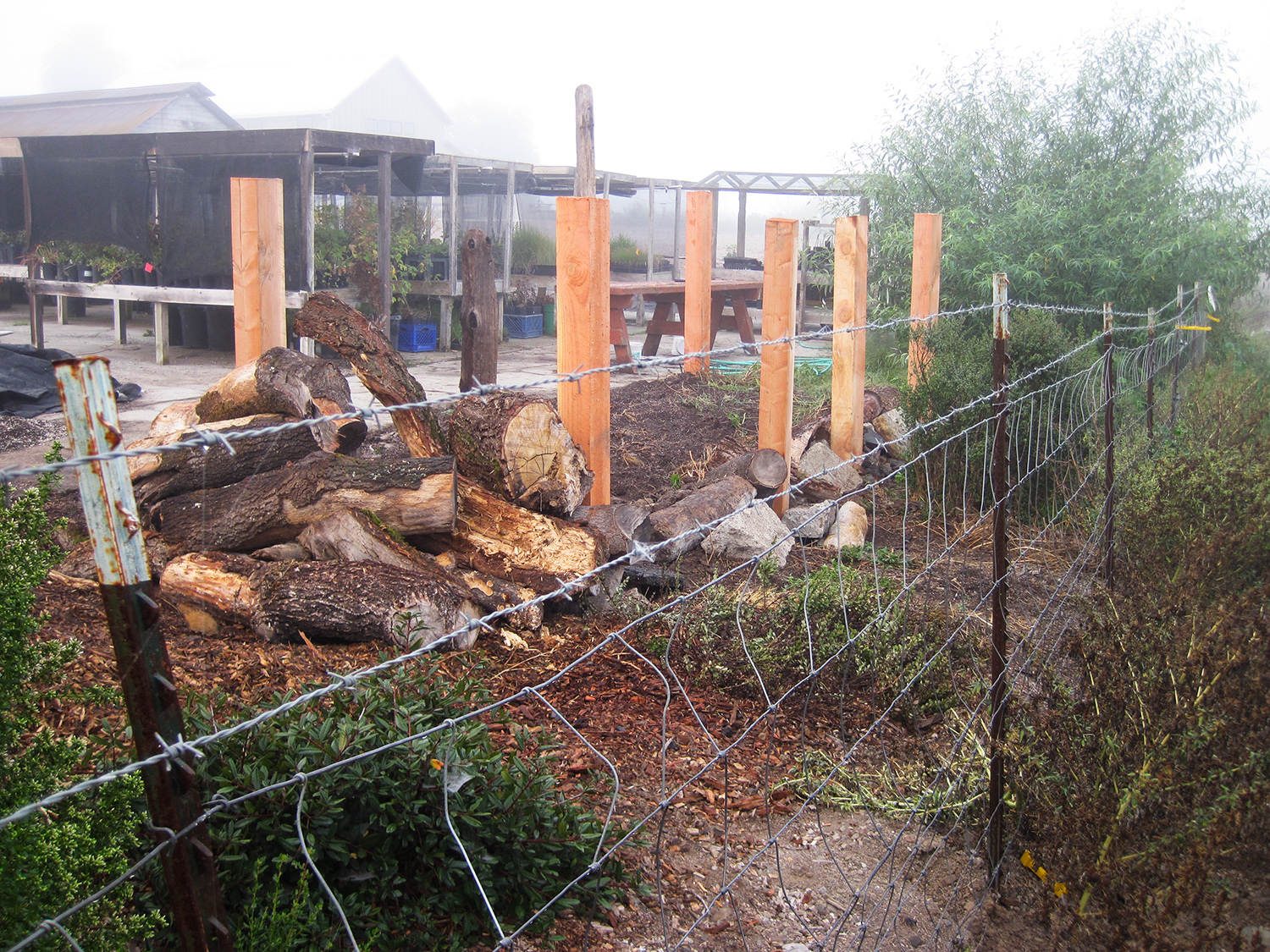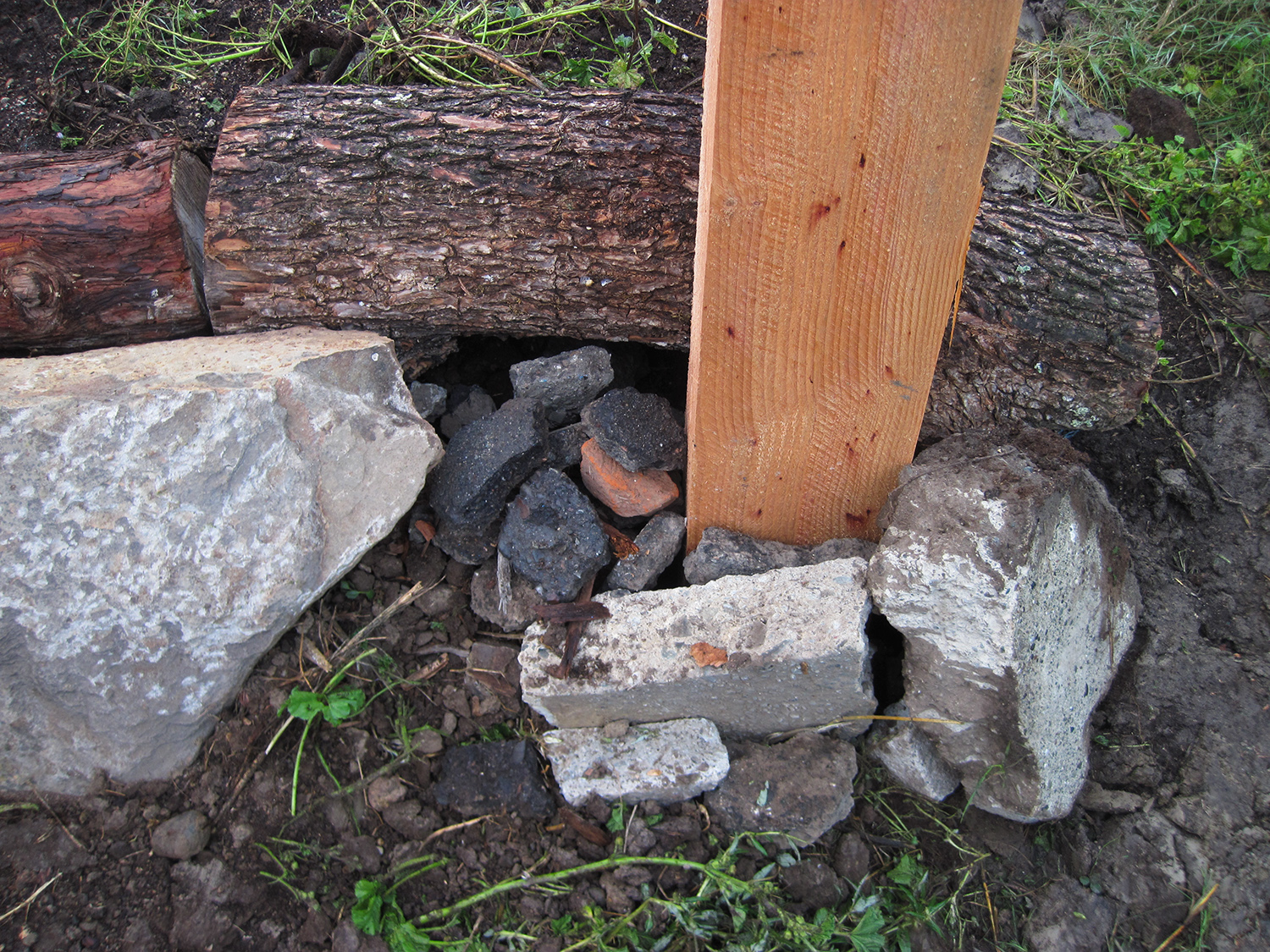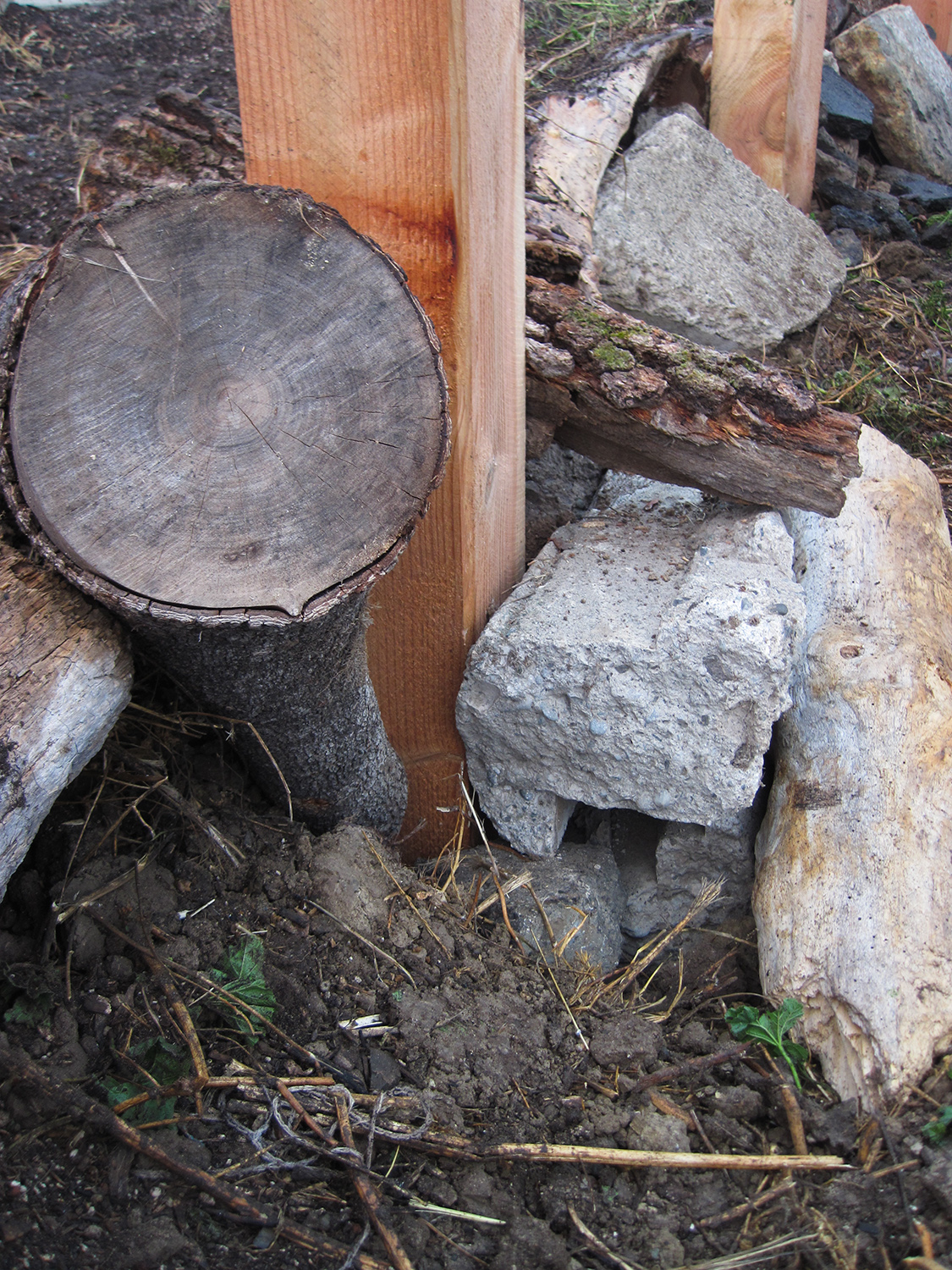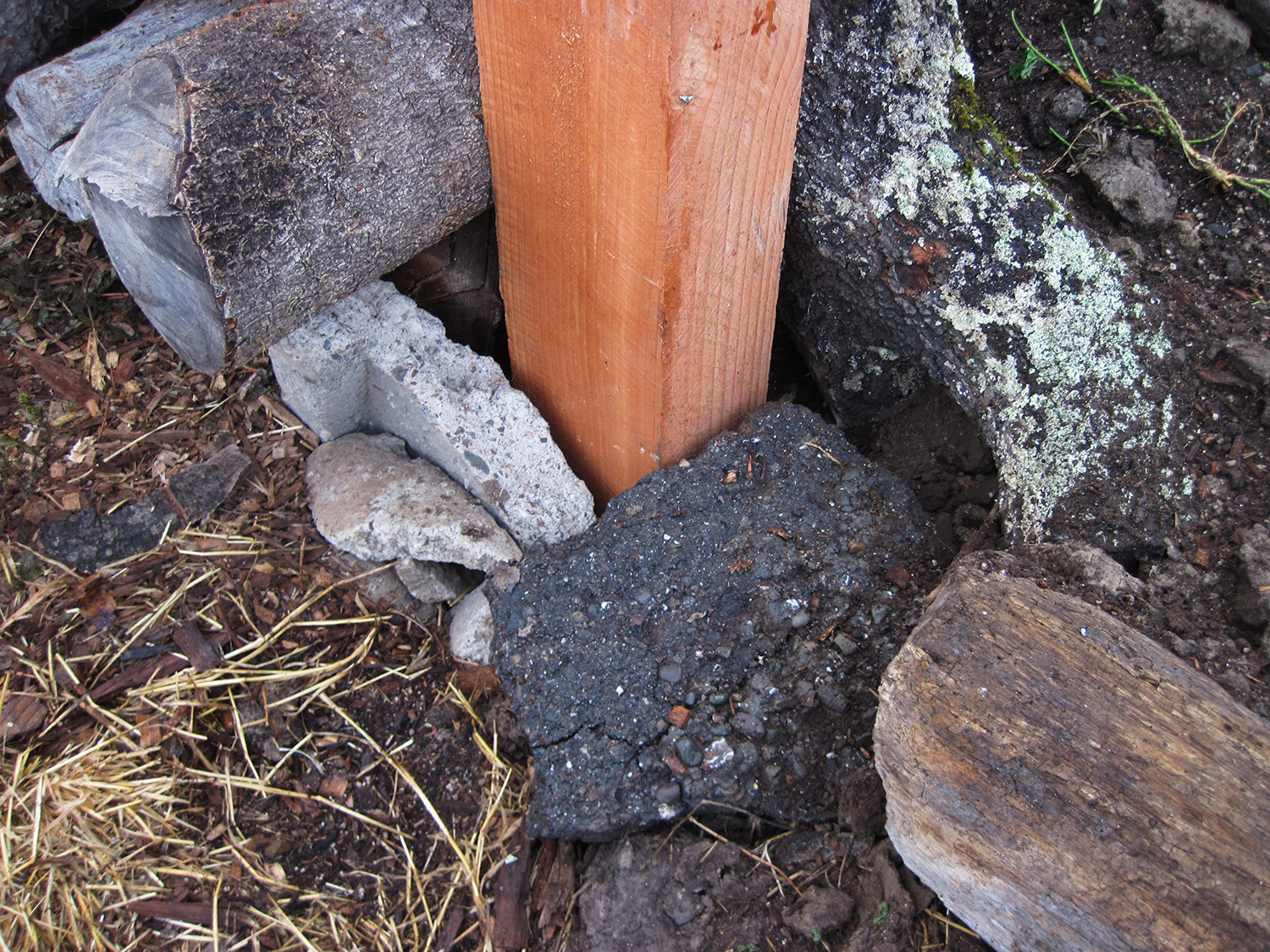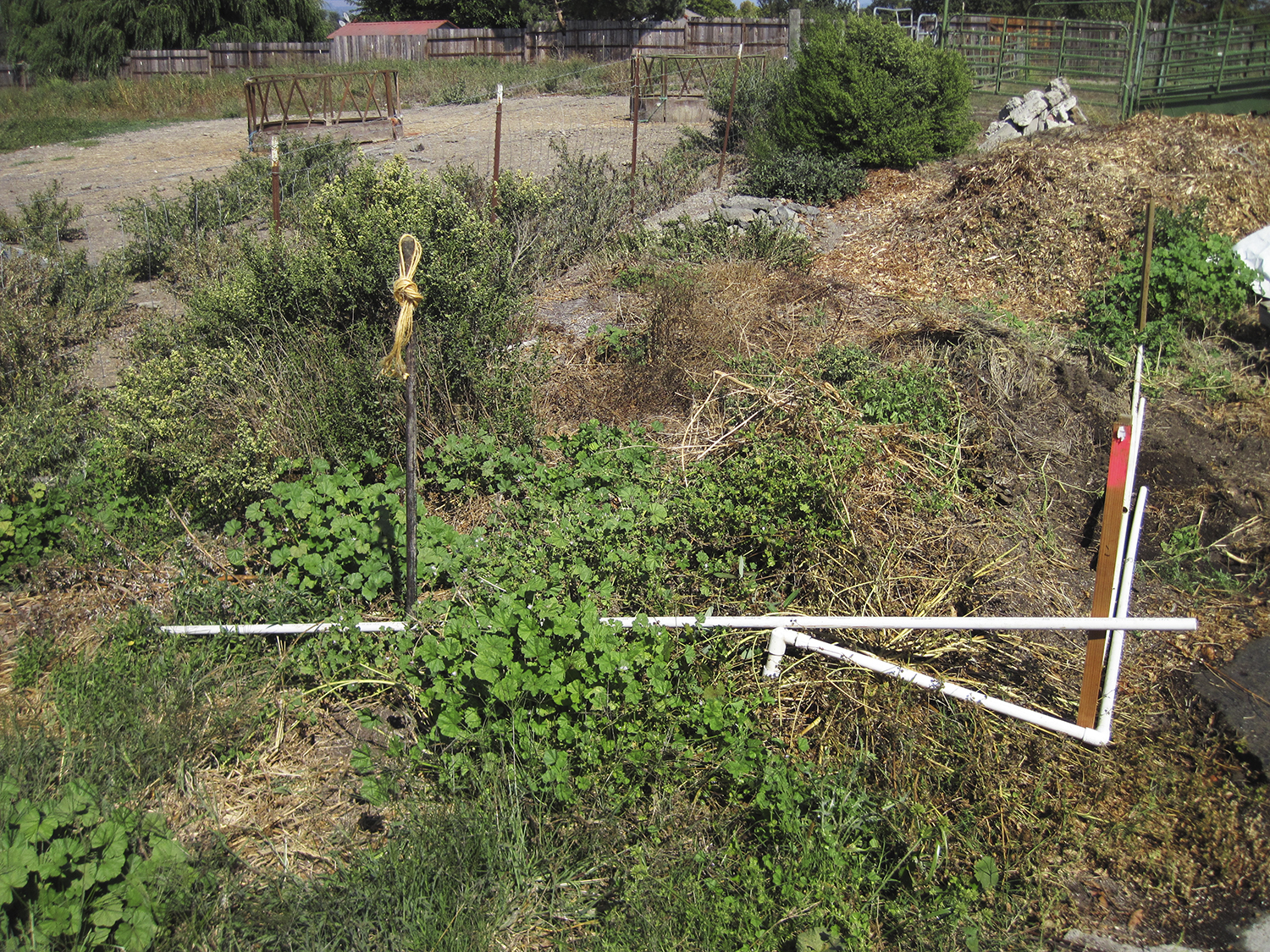
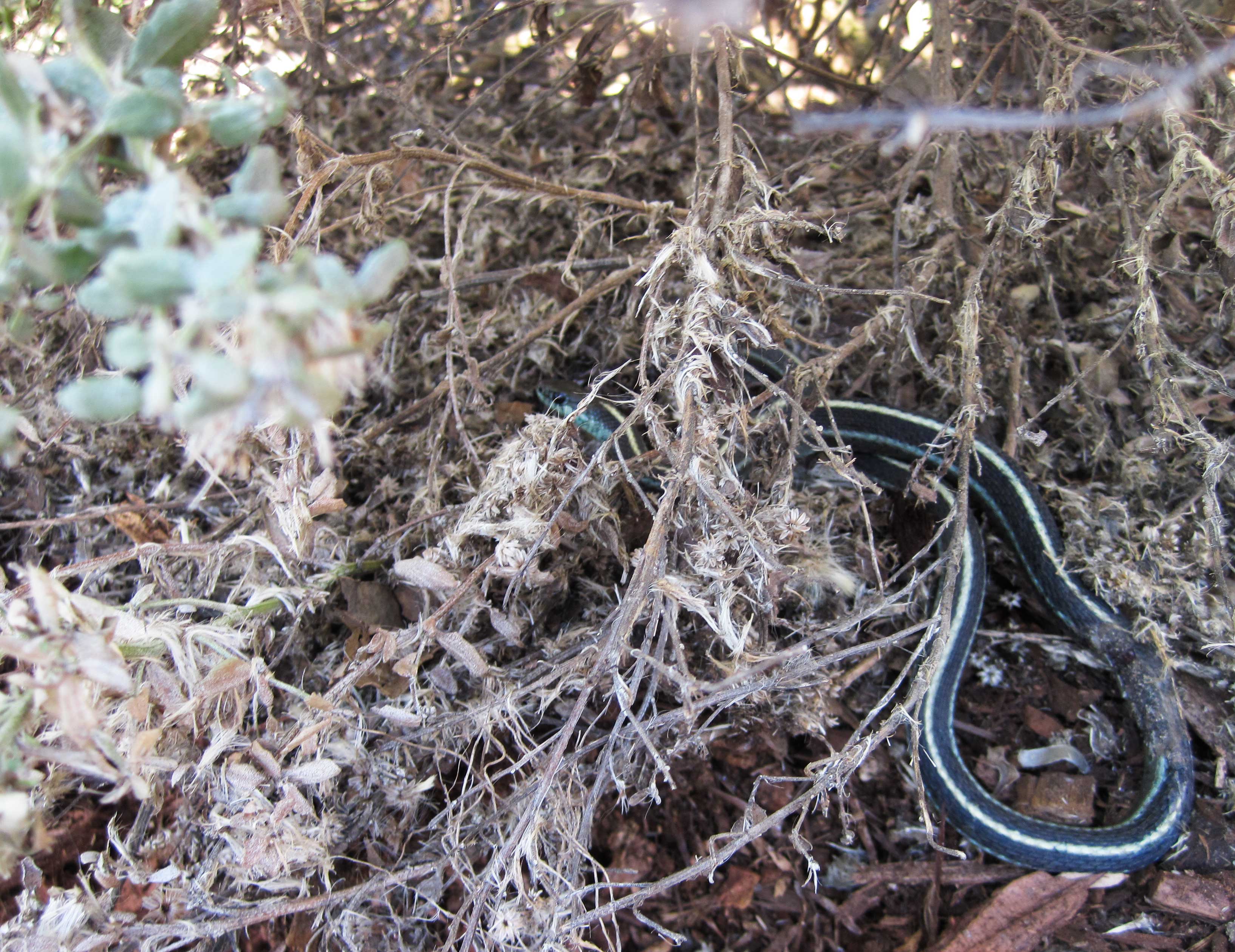
 A garter snake soaks up the sun while Garter Snake Ravine is dug. I worked not more than ten feet from this snake, banging and chopping at the rock/stone/gravel hardpan surface for a couple of hours till I spied it under the coyote brush.
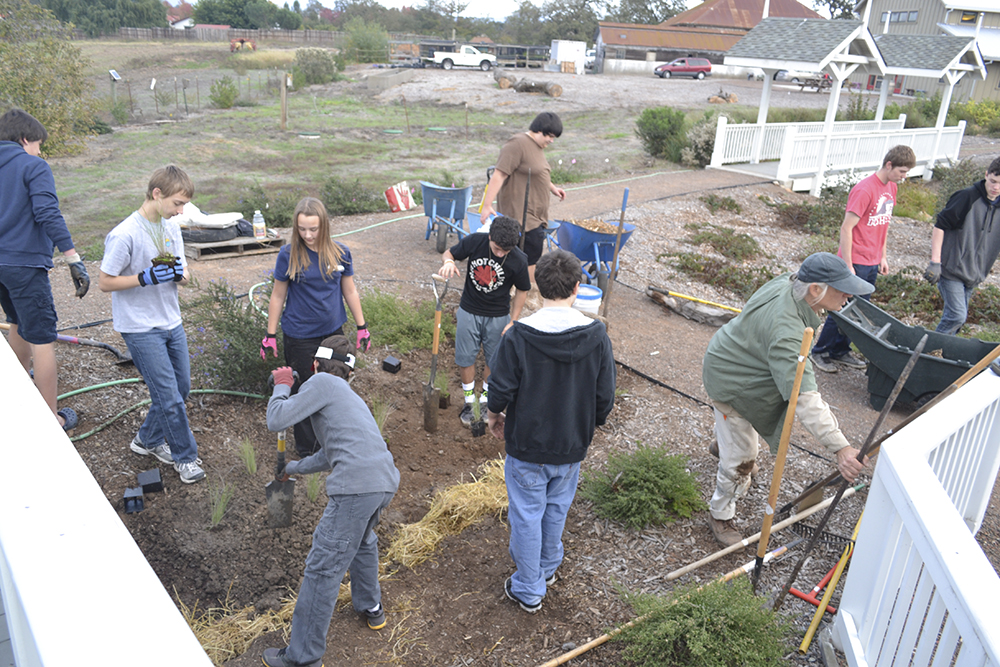
This month’s project with Orchard View School at the Laguna Foundation’s property, the Laguna Environmental Center, is called Garter Snake Ravine. The name was inspired by the many garter snakes that have been seen at this wildlife installation’s site.
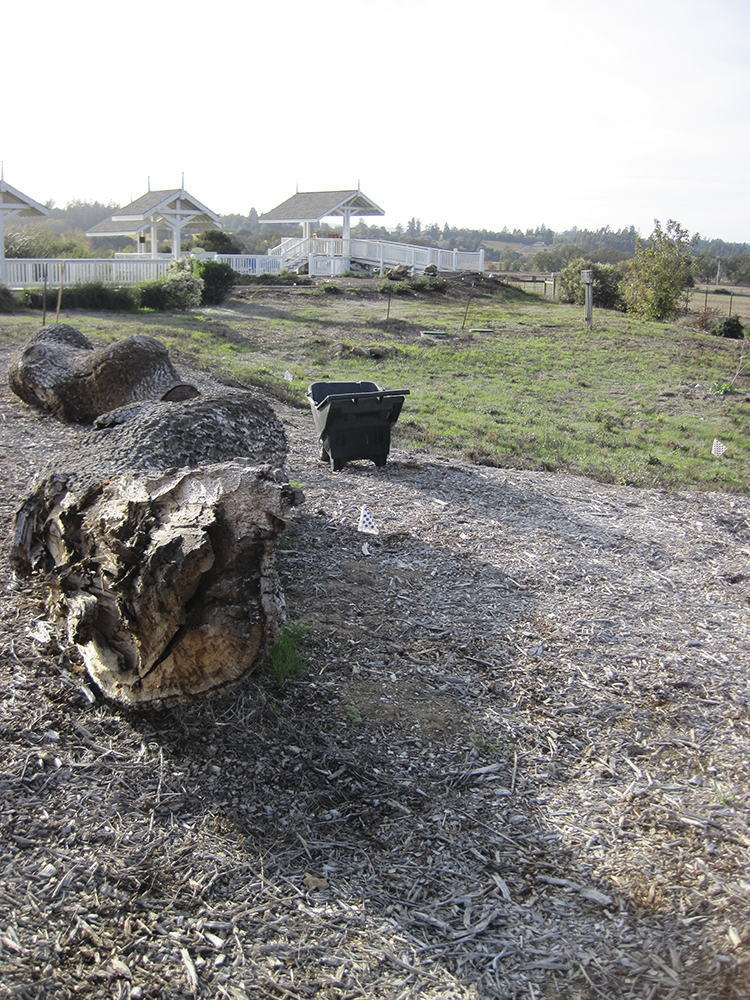
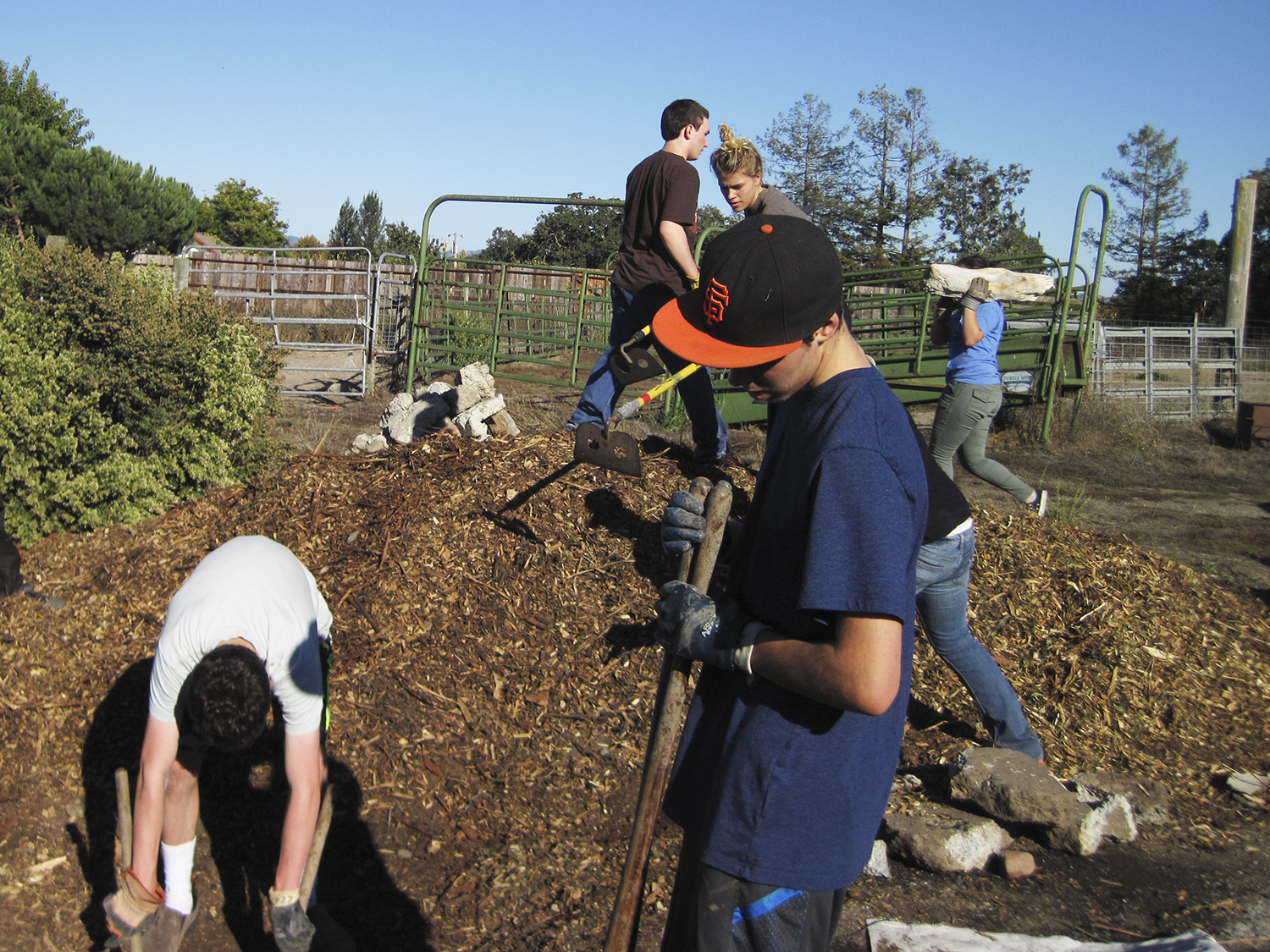
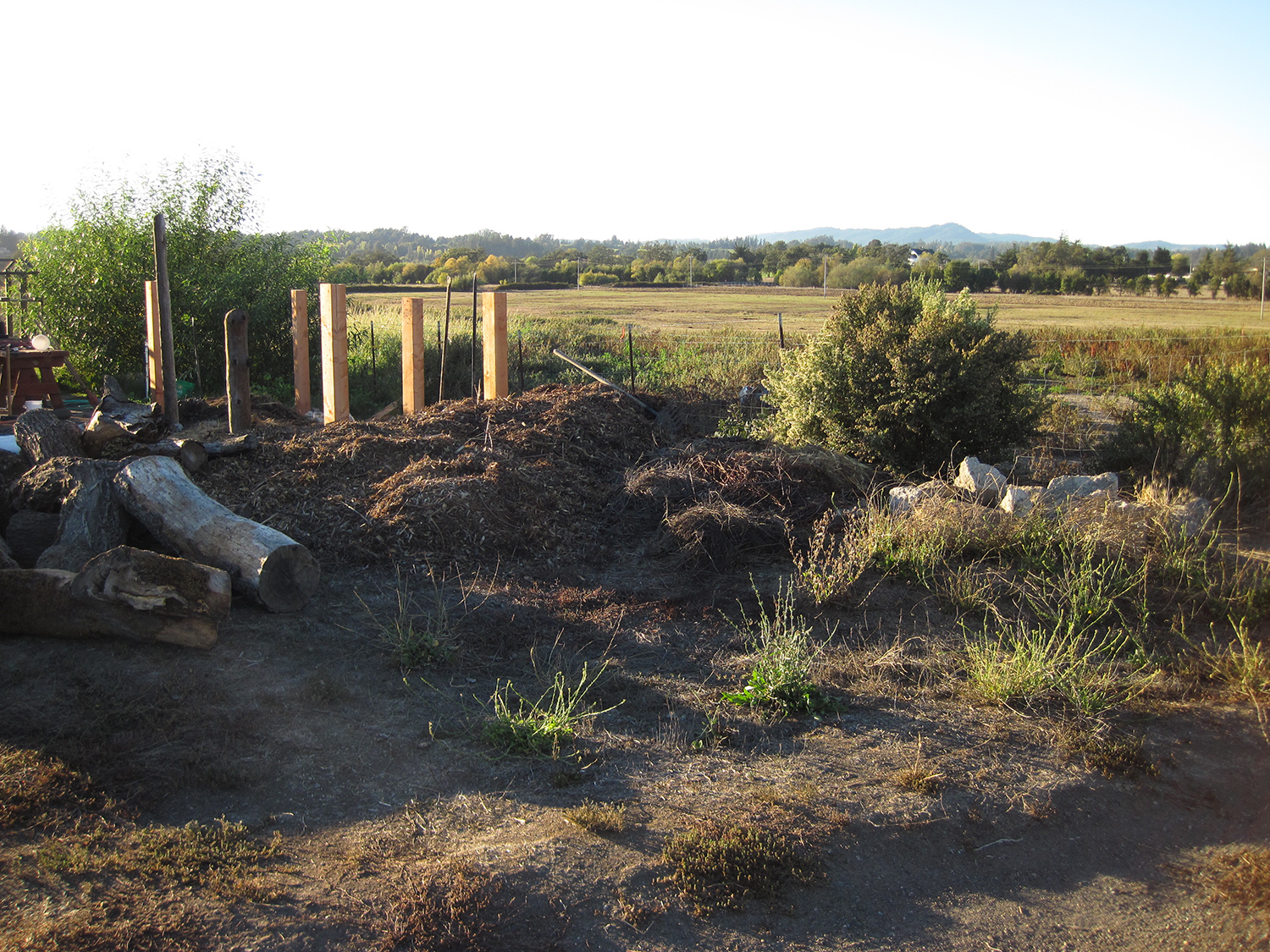
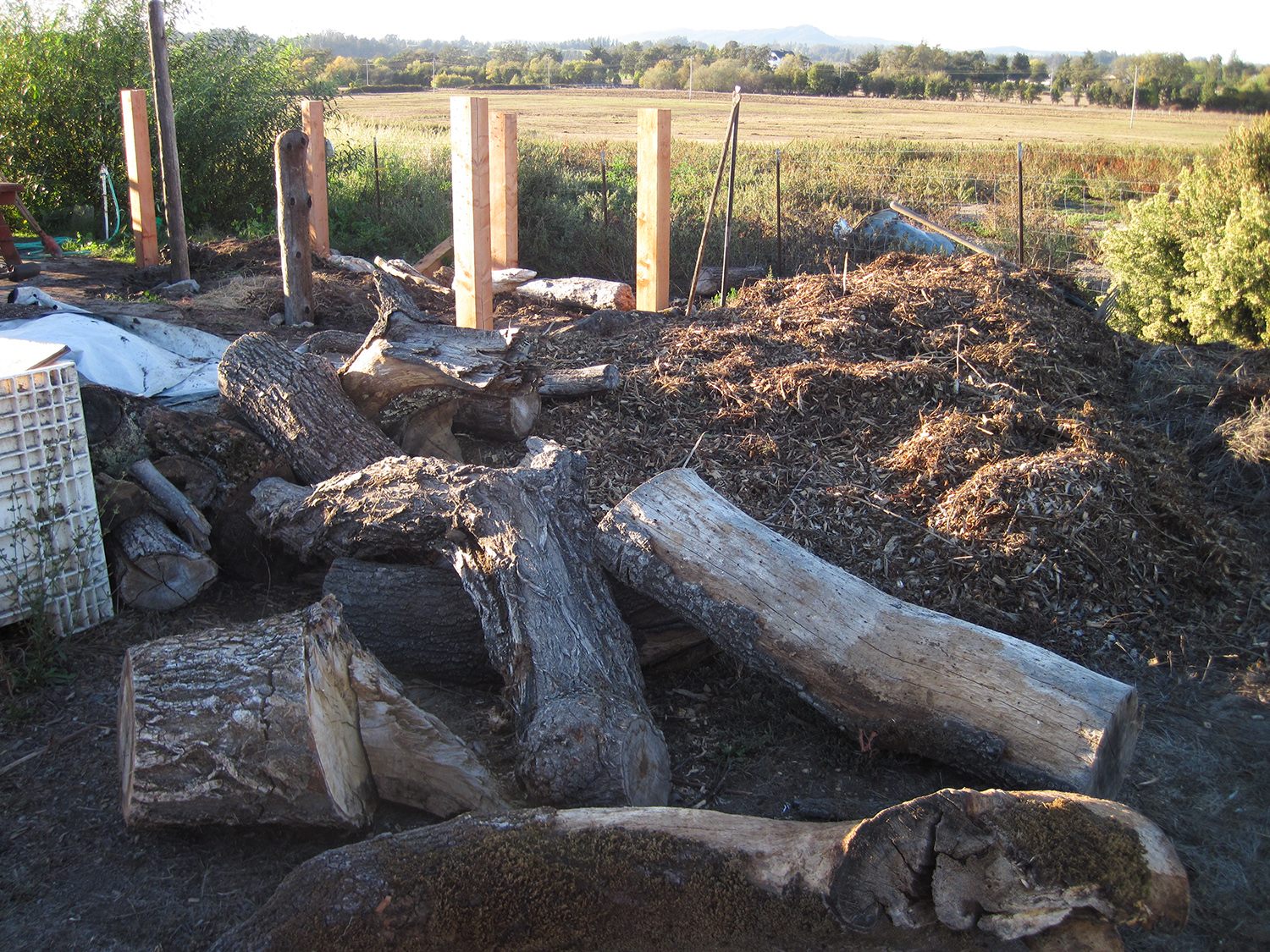
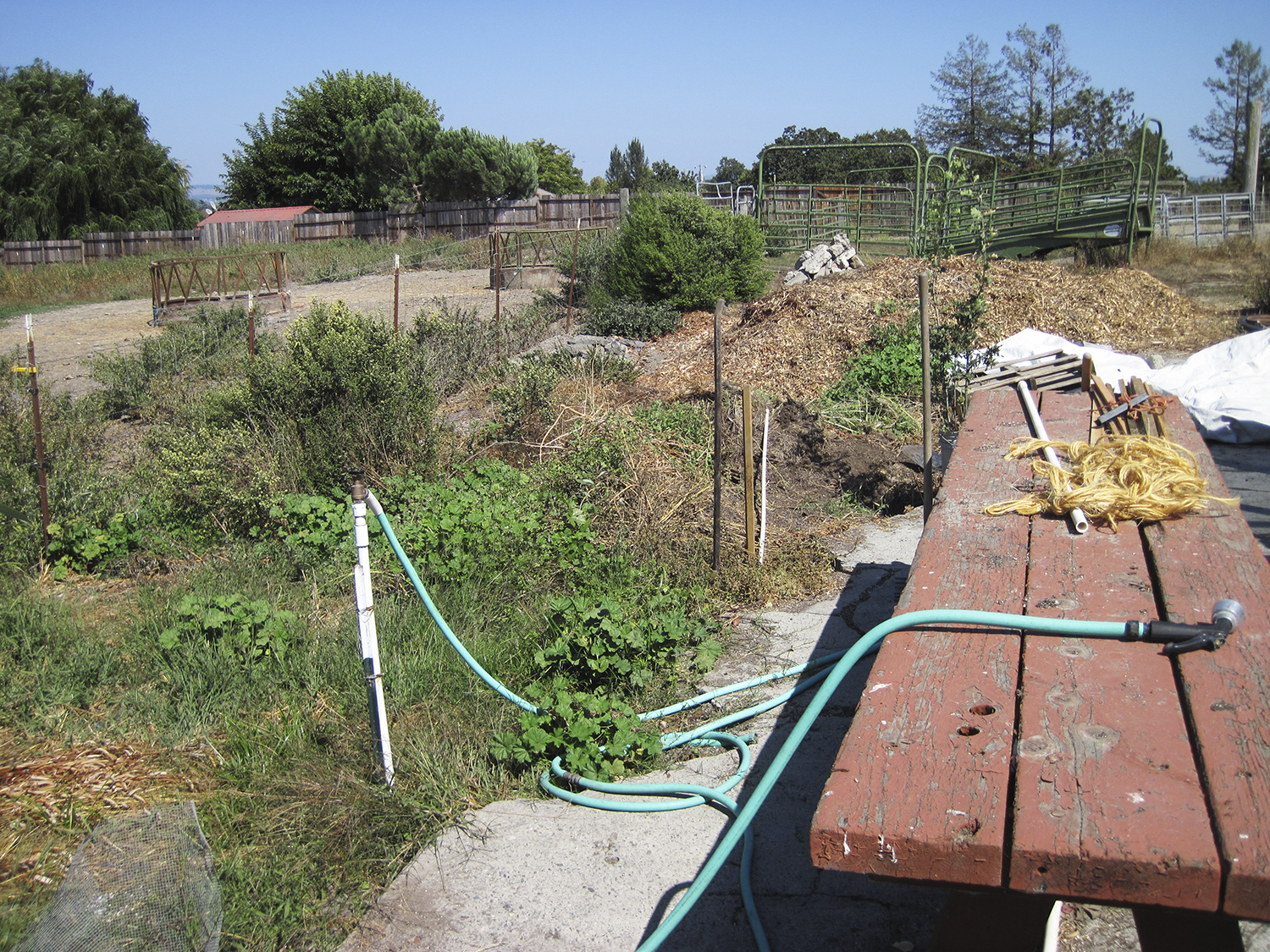
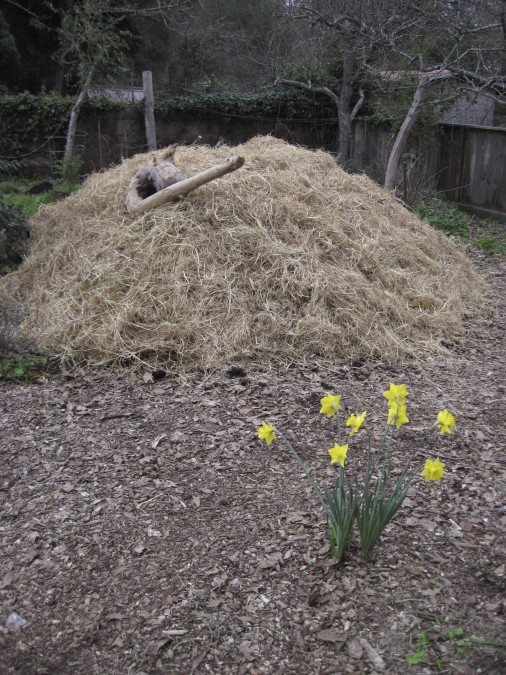
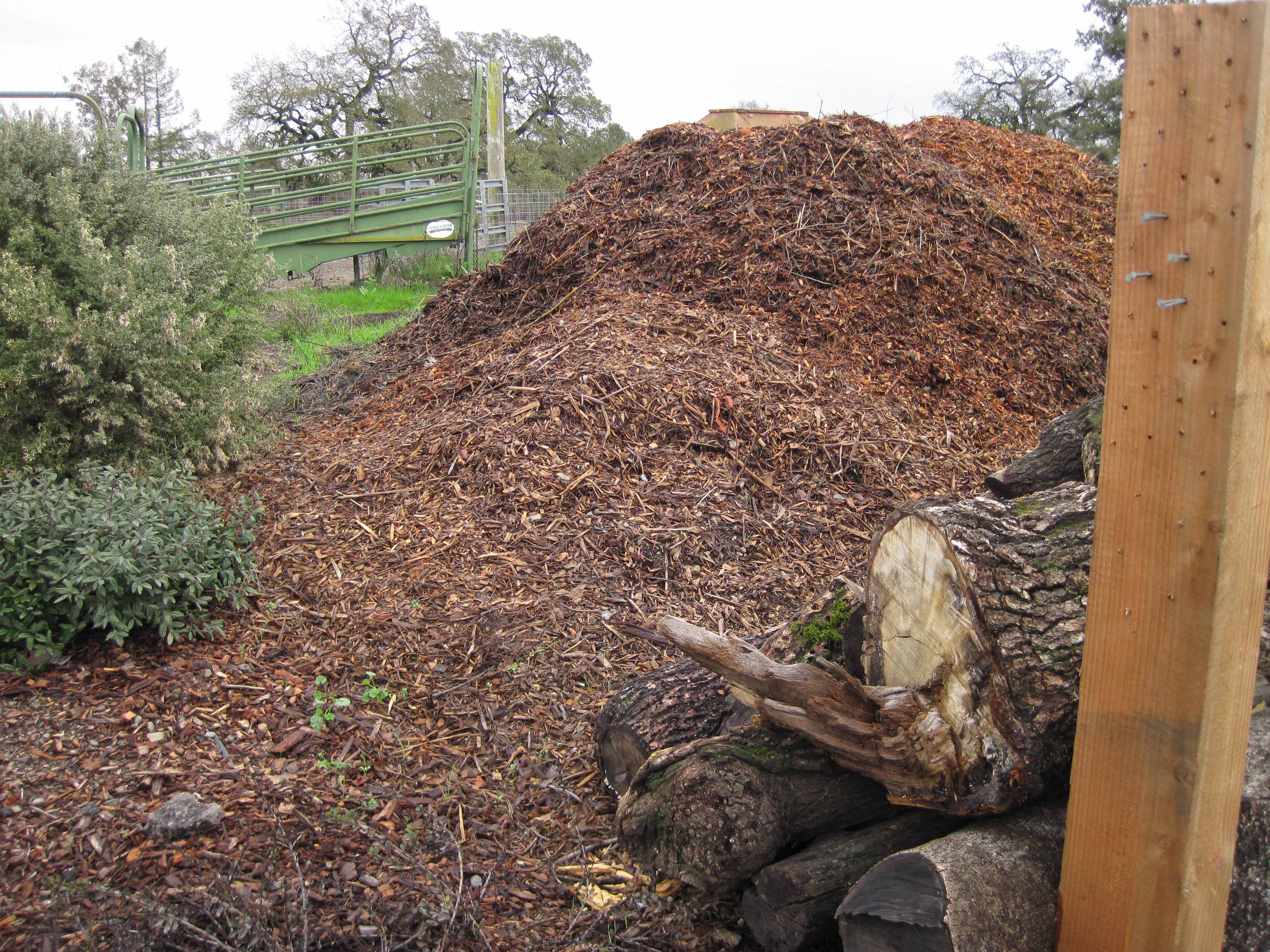 The wood chip pile to be moved/shaved off a dozen feet or so to create space for Garter Snake Ravine. View from behind Compost Cricket Corral, looking past Log Pile Apartments. Habitat it! Note the coyote brush at the pile’s left edge. Coyote brush is a very important native, drought tolerant habitat shrub in our environs of Northern California. The coiled garter snake in the first picture was basking under that shrub while I worked.
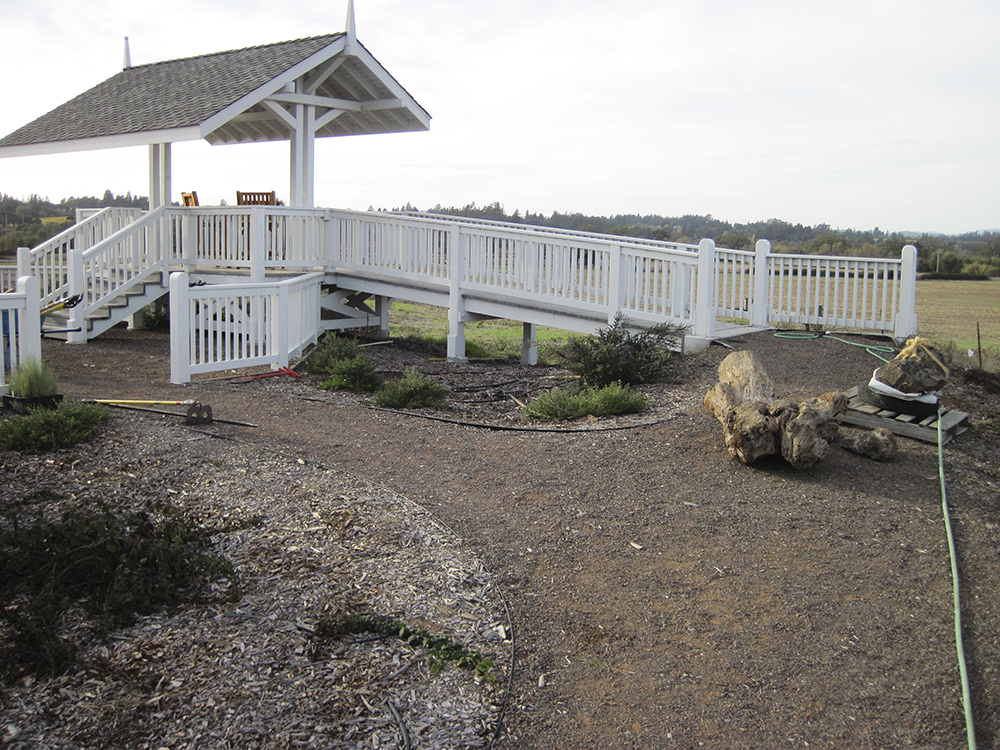
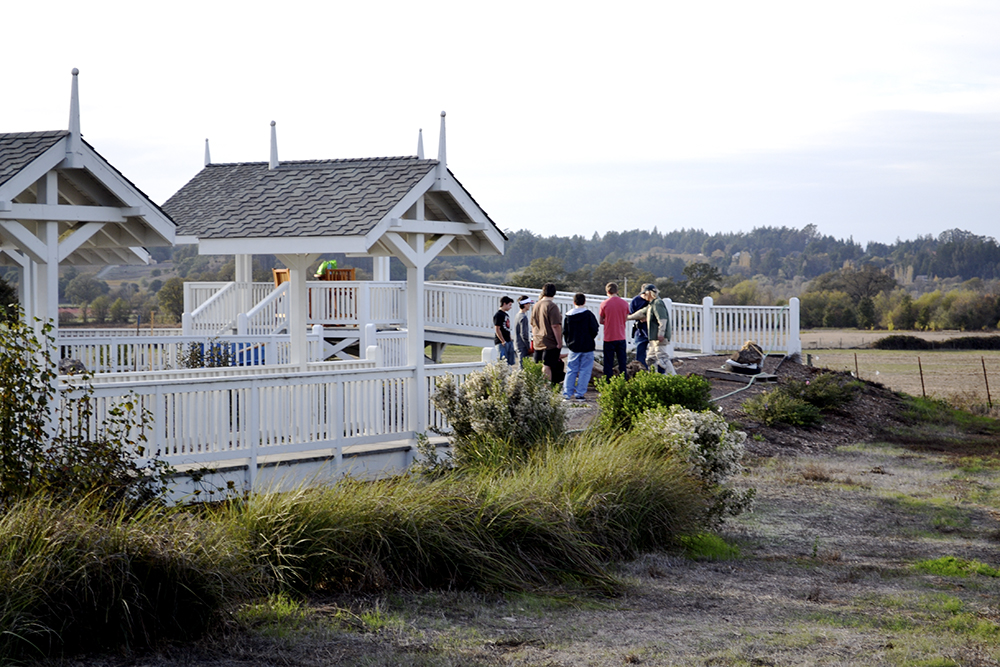
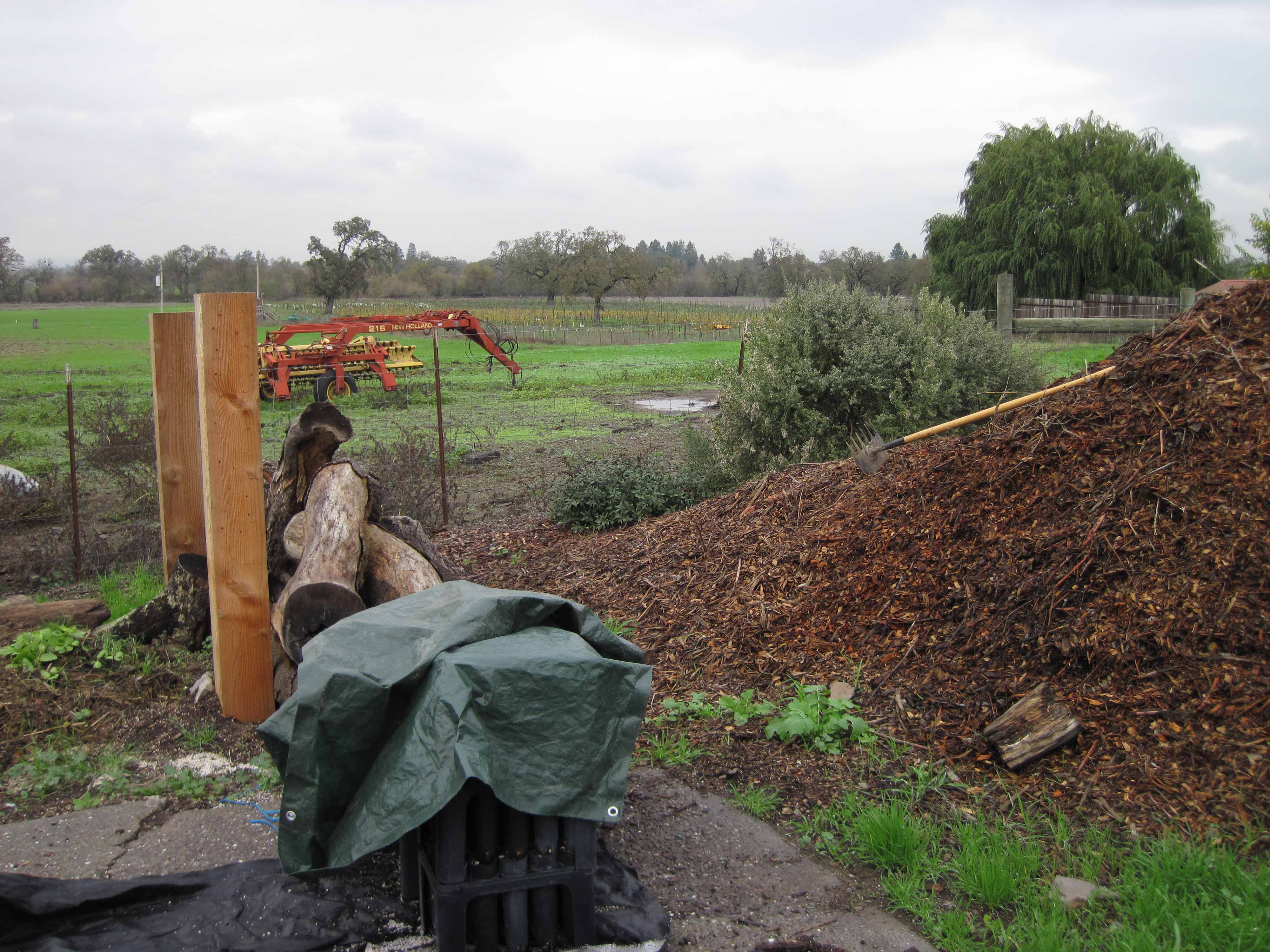 Front view of the wood chip pile to be moved away from Log Pile Apartments to make way for the new wildlife habitat installation, Garter Snake Ravine. Note the coyote brush (large shrub, right) and the ceanothus (smaller, left) behind the wood chip pile. Those native plants will be good habitat components of the adjacent Garter Snake Ravine. Ultimately, the wood chip pile will work together with (right to left) Garter Snake Ravine, Log Pile Apartments, and Compost Cricket Corral to support wildlife habitat — food, water, shelter, and a place to raise young. As for water alone, the wood chip pile will store moisture and wick it to the habitats’ grateful critters during the long, dry summer months. Critters feeding daily/nightly in the compost will seek refuge in the many (too many to count!) nooks and crannies of these habitats. Microbe- and nutrient-rich soil amendments will made by those willing habitat critters.
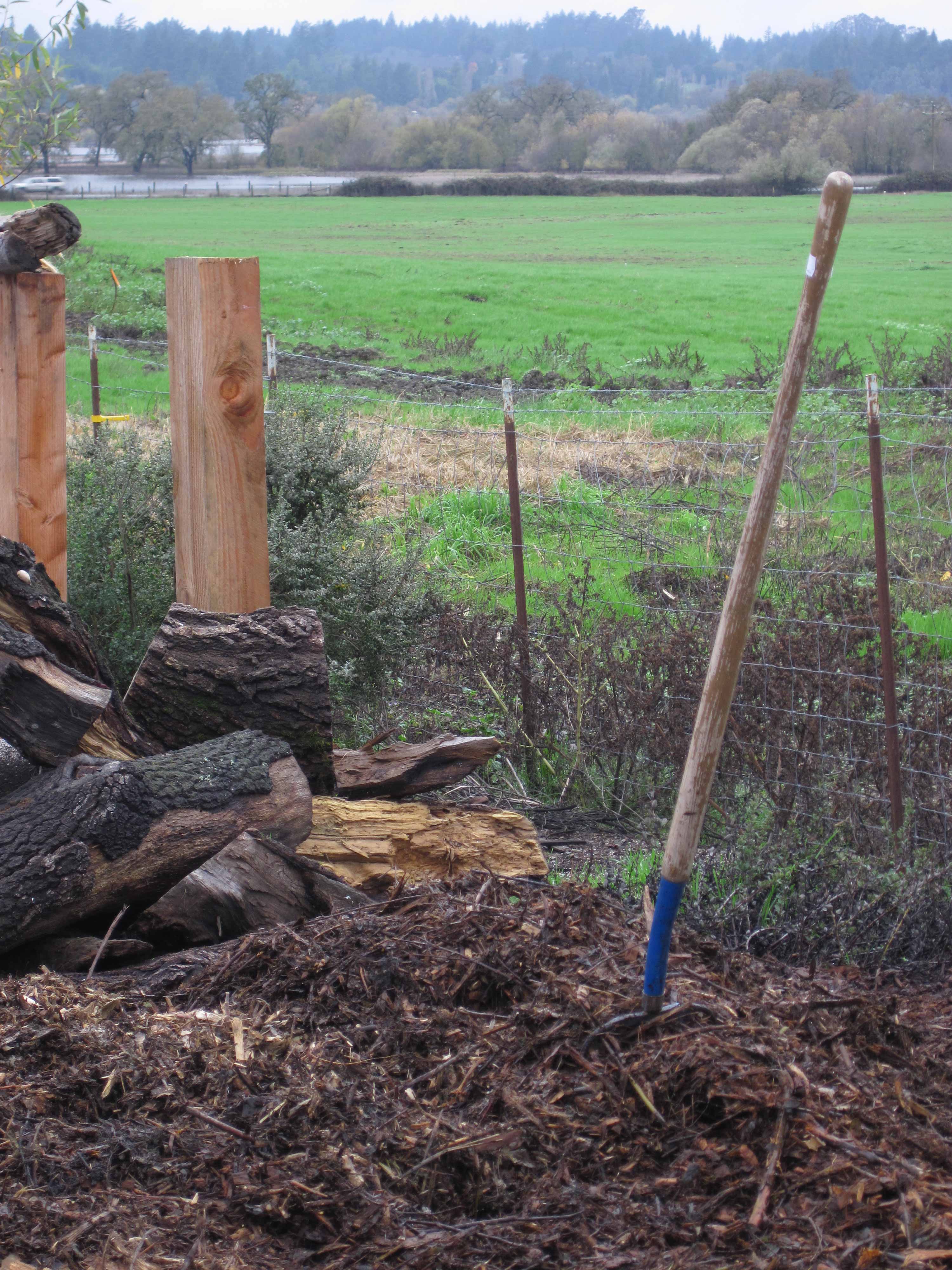 There’s a wood chip pile to be moved! Note the Laguna de Santa Rosa is cresting in the background. By tomorrow it will flood Sanford Road (the white station wagon, top left, is heading south on Sanford). This is tree frog, salamander, and newt weather. Rain, rain, rain! The Laguna floods its banks every year, providing the services of the wonderful watershed it is — to allow water to spread out and return to the land before rushing down river and out to the sea. A great place to kayak!
 Stuart from Stone Horse Farm gave the pile a shove and scrapped the top soil layer off to one side. Thanks for the tractor (top right) work, Stuart! Note the packed gravel and stone soil base that was uncovered from under the wood chip pile. Unlucky for us and the critters, the small area seems to have been a road surface debris pile at one time. Lucky for us and the critters, the habitat microbiome will eat up the asphalt debris.
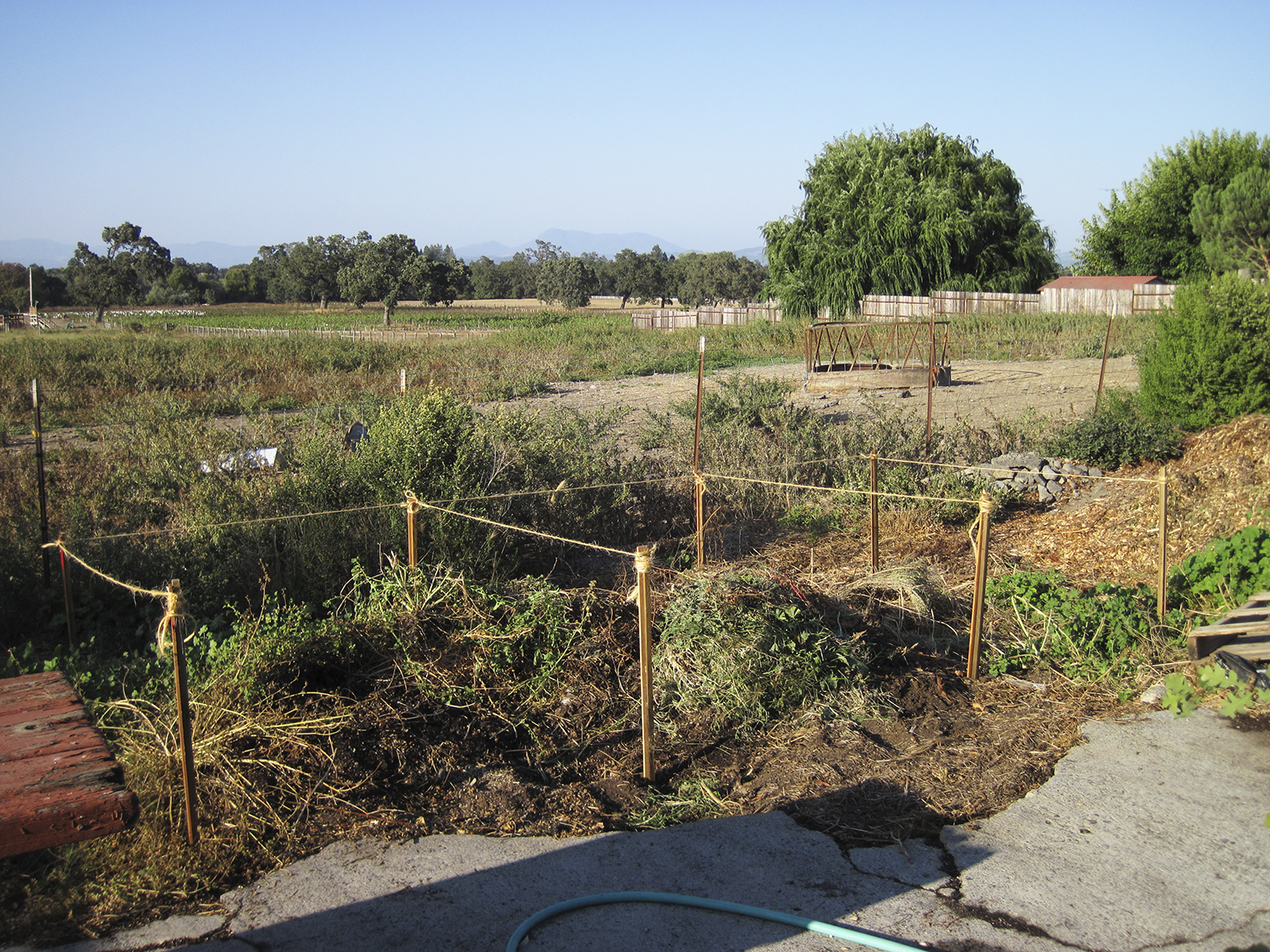
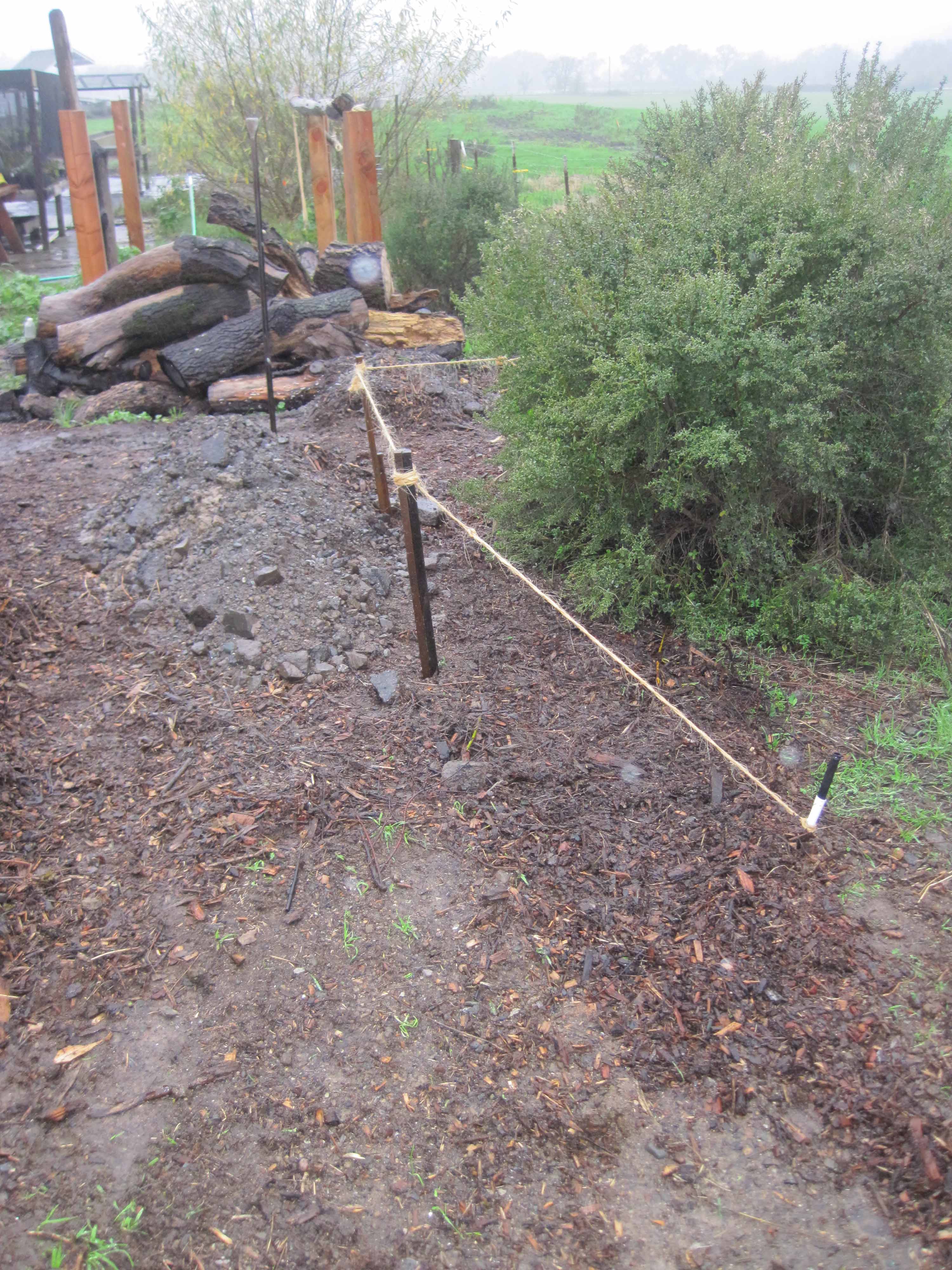 The coyote brush, a sacred plant (especially to the snake living under it), is roped off to protect it during the wildlife habitat installation.
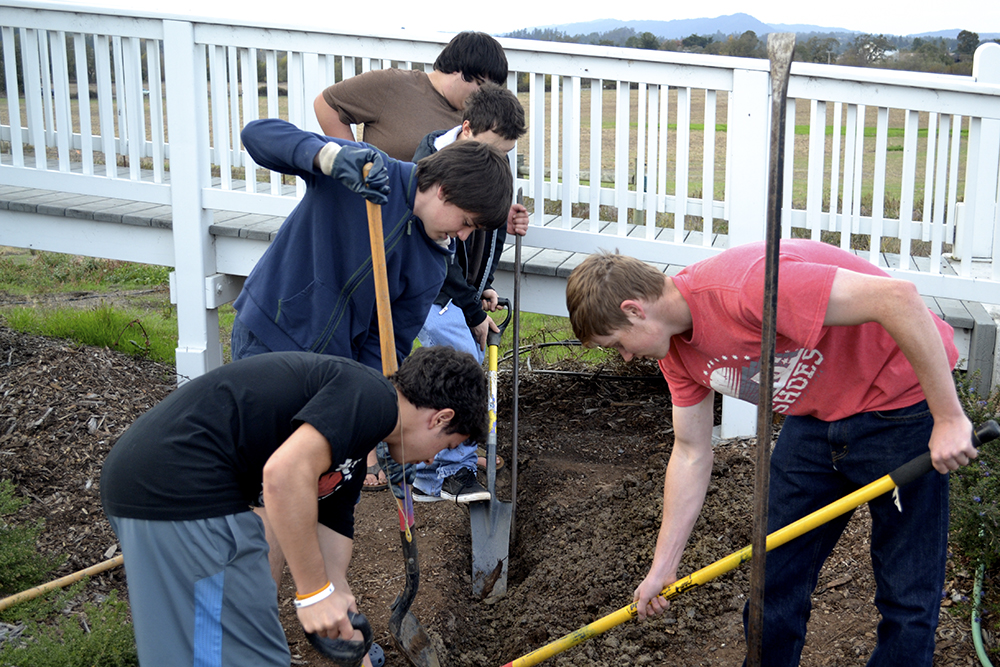
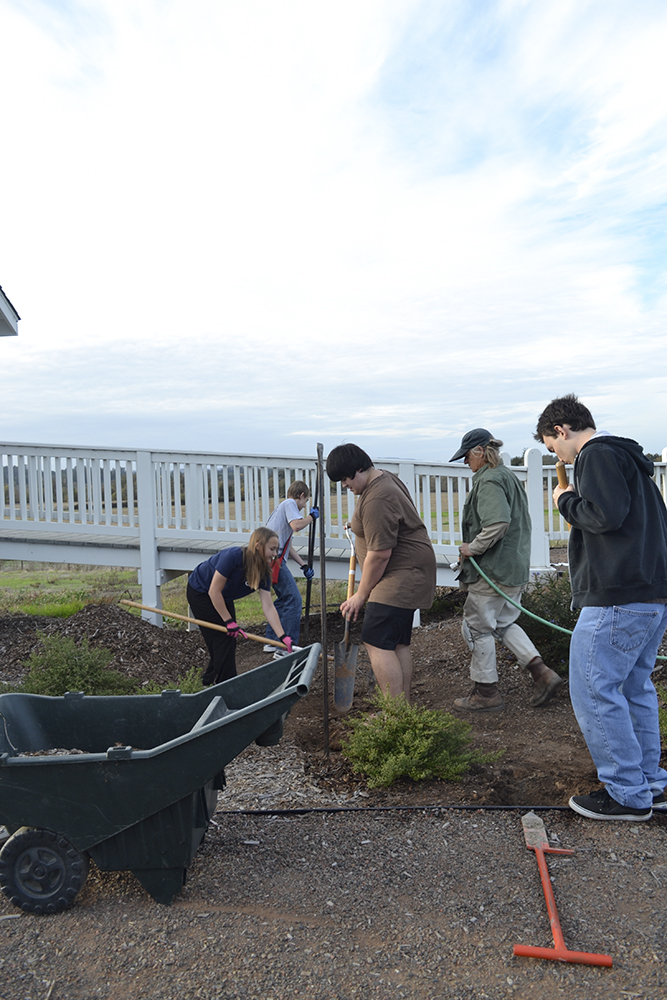
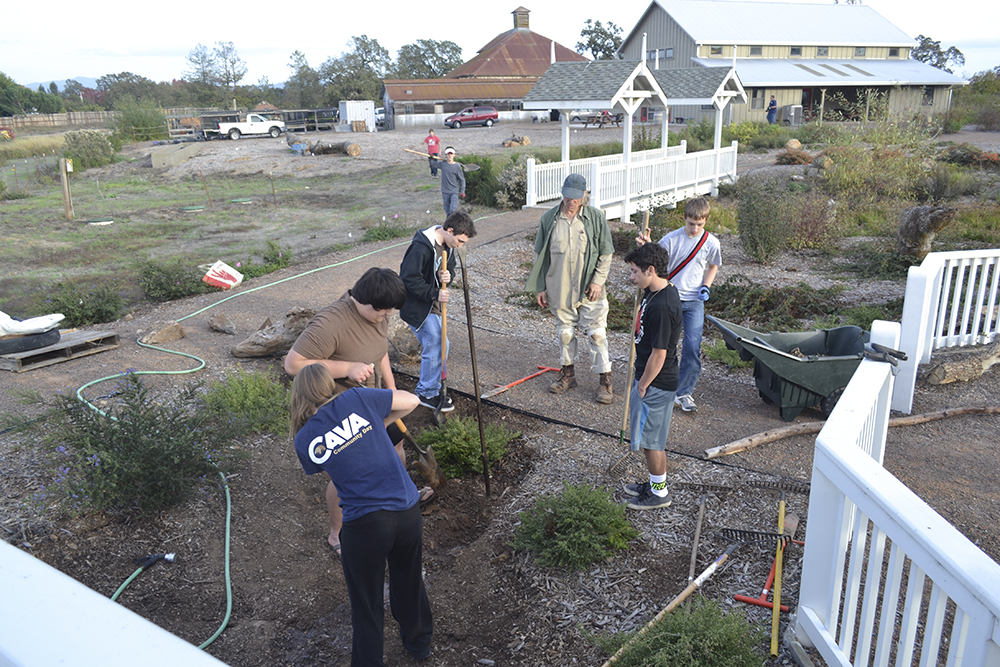
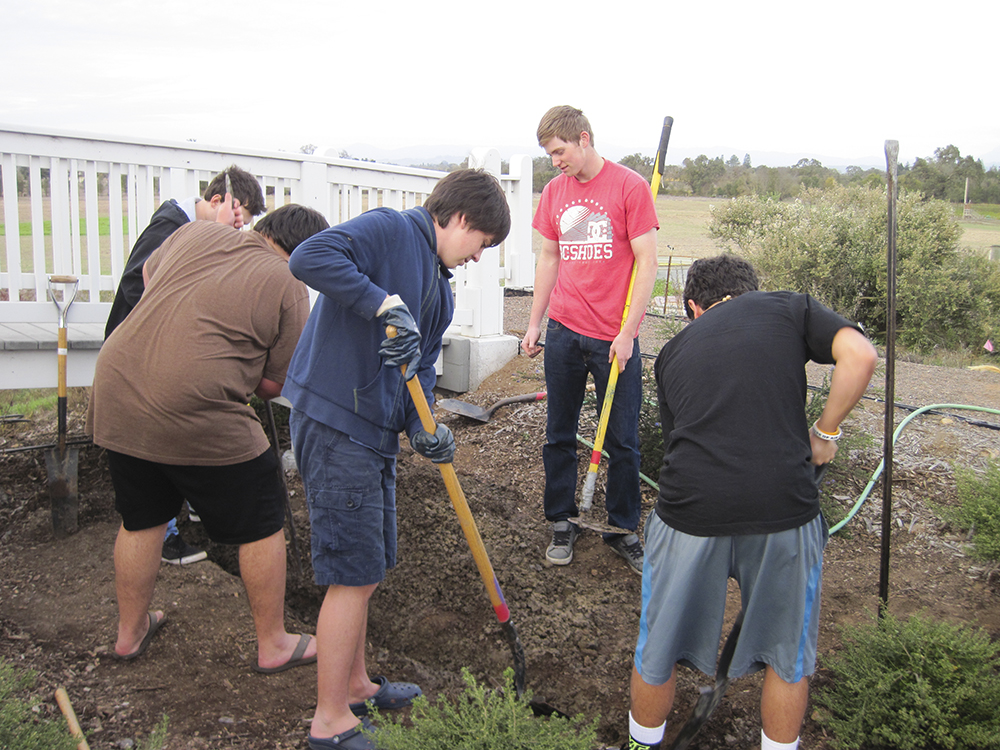
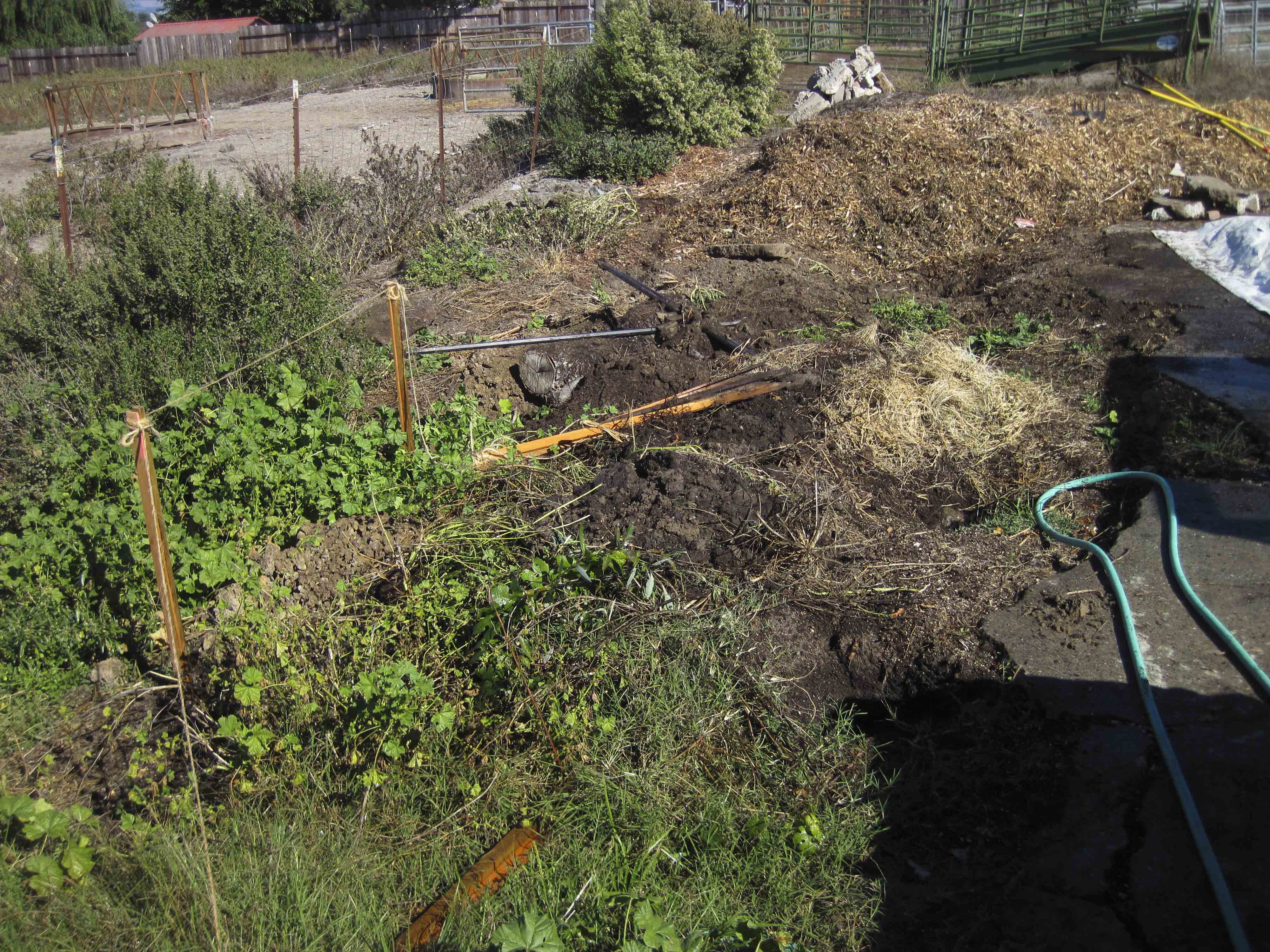
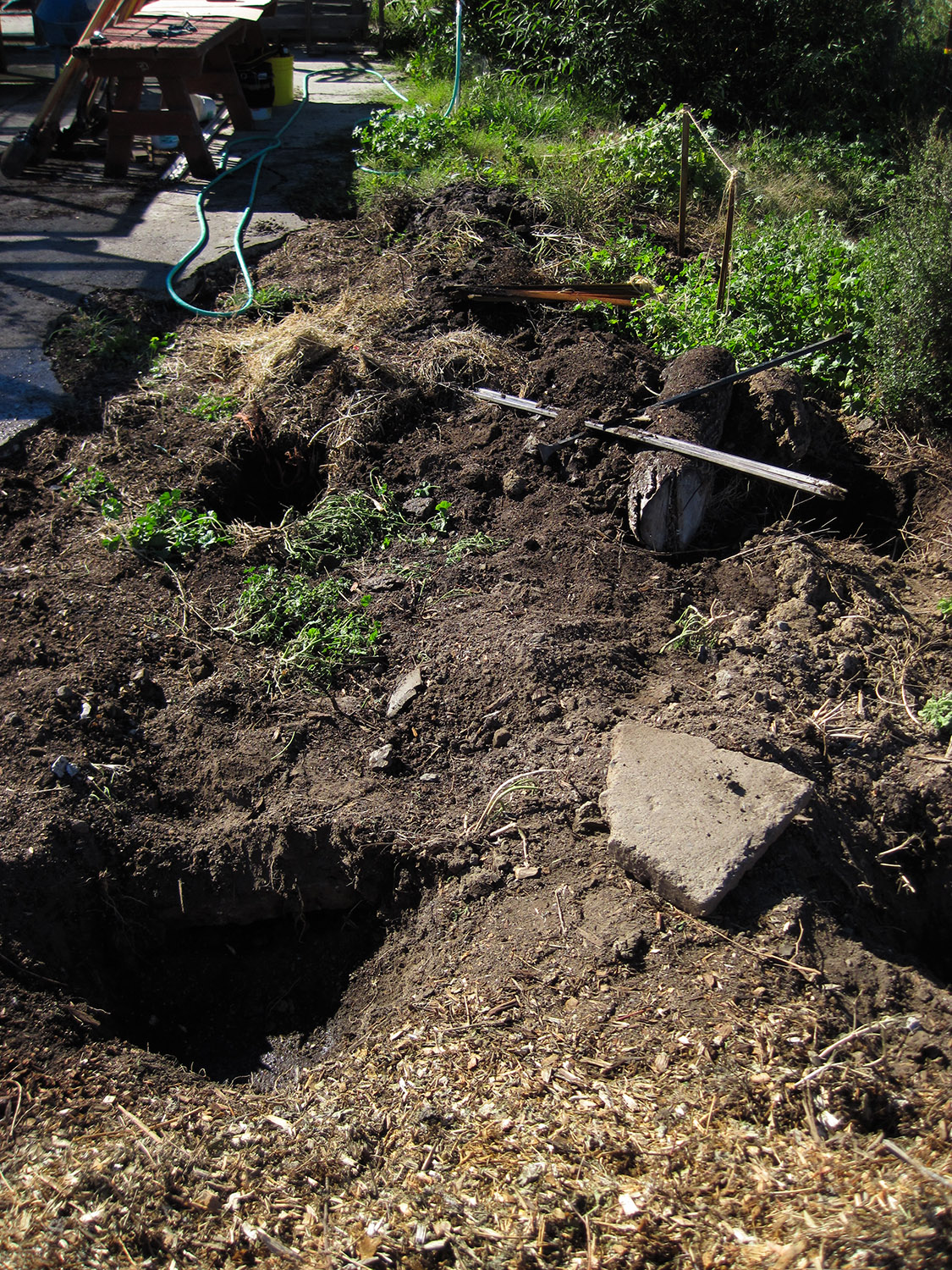
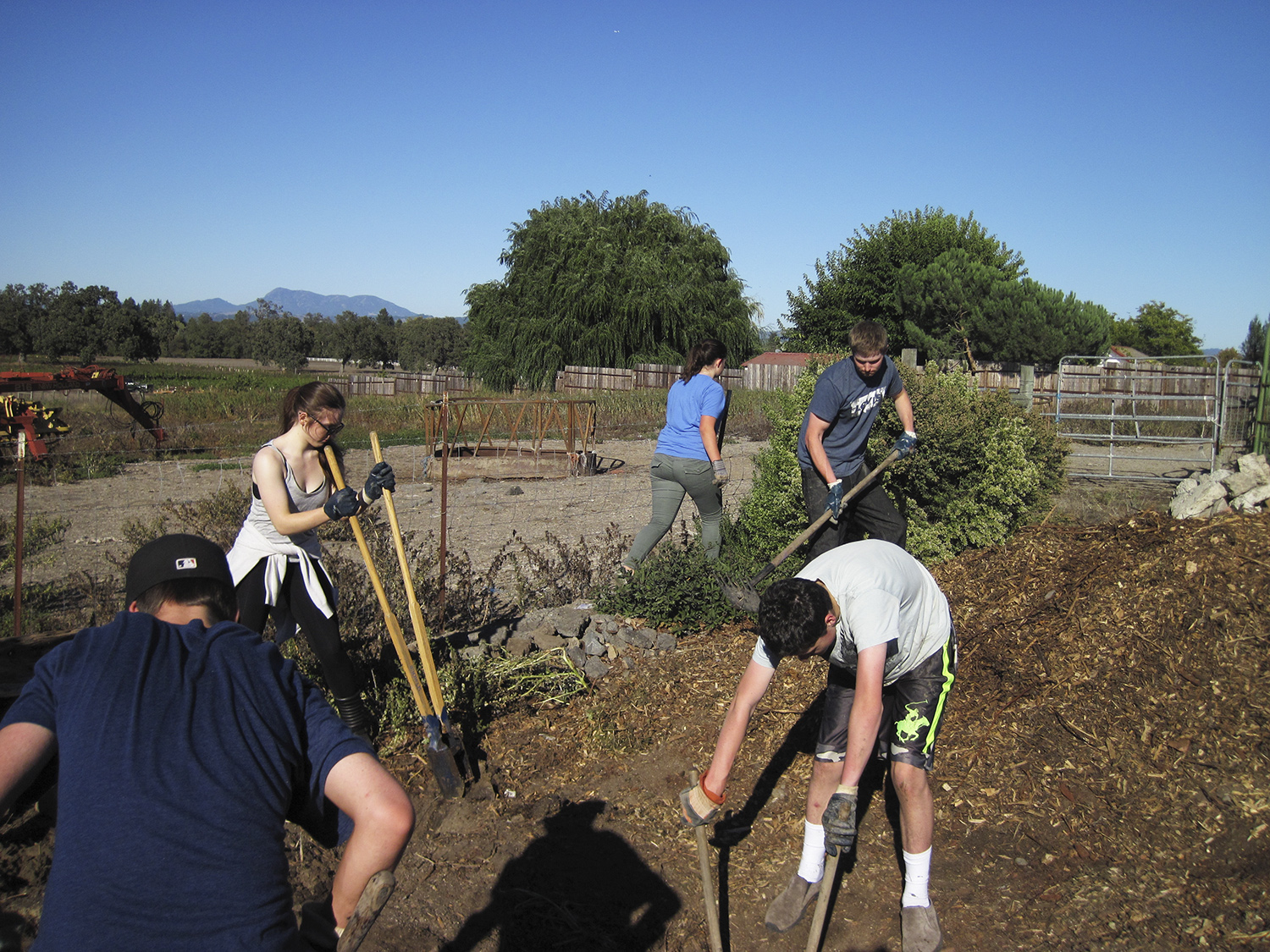
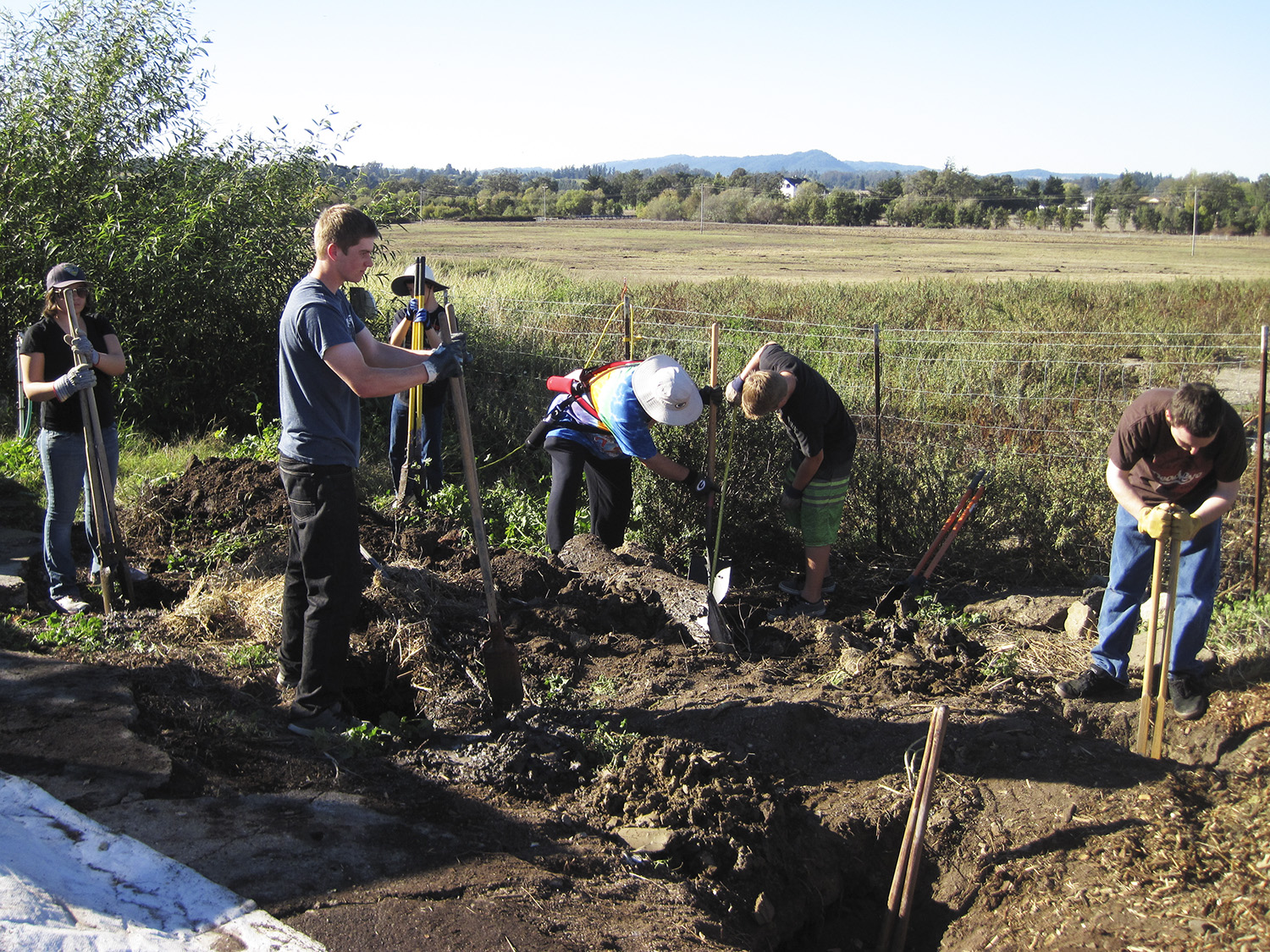
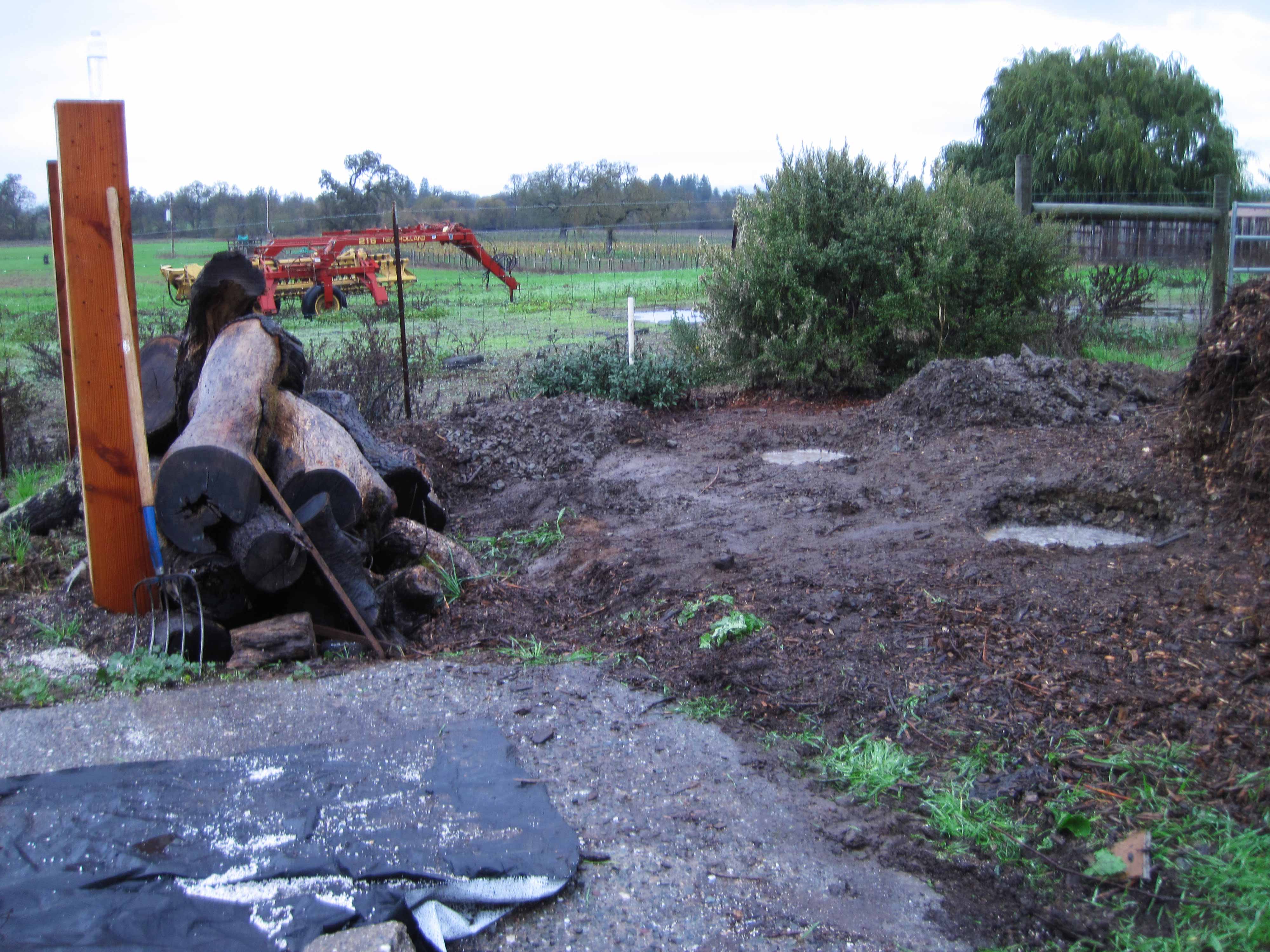 Holes are dug into the packed gravel, hardpan adobe clay, and stone surface. Water soaking in the holes will soften the surrounding ground to allow faster digging progress.
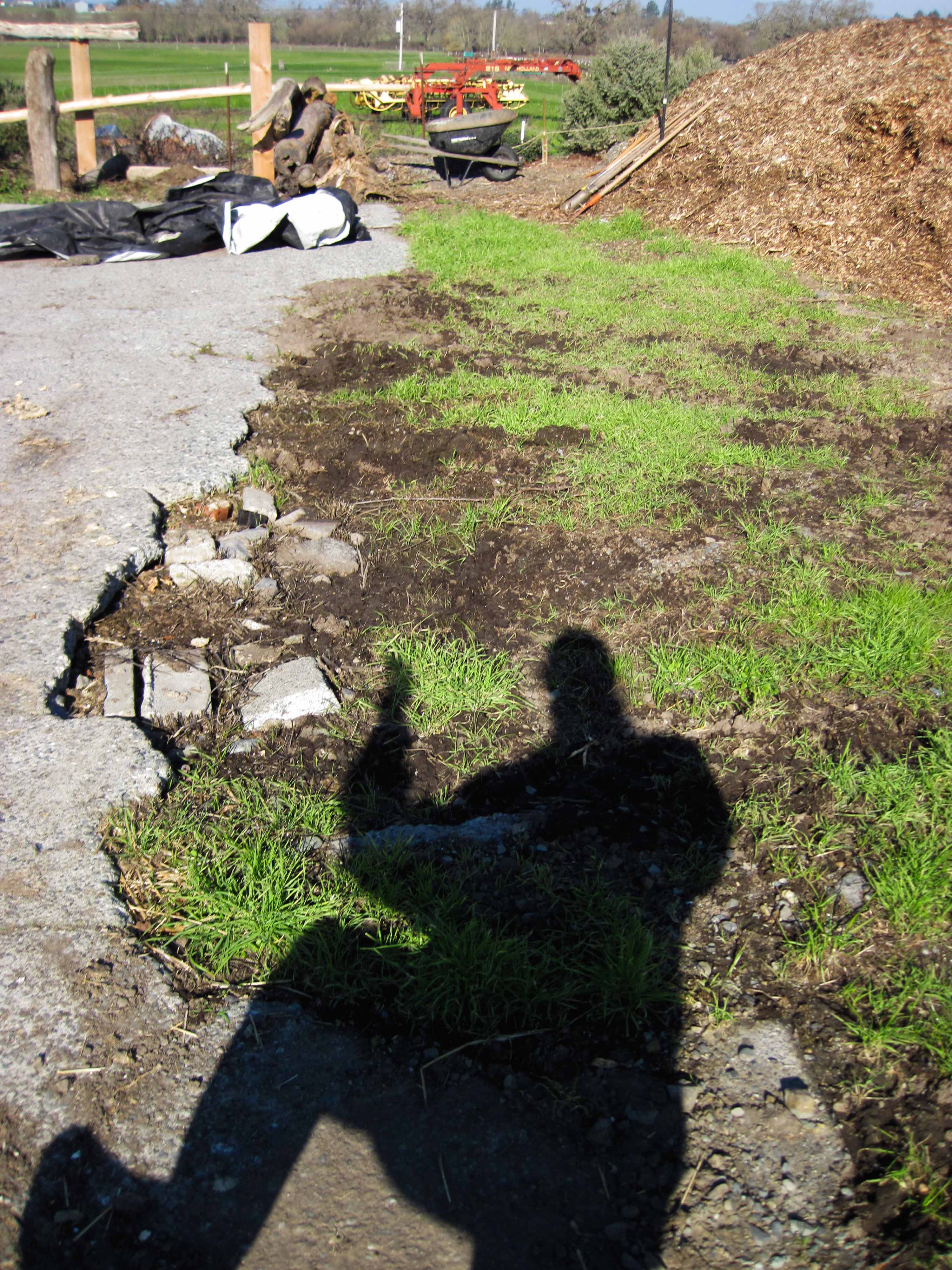
 Looking south to the Hop Barn, with manure pile on concrete slab. The Foundation’s Native Plant Nursery is off to the right. Currently, the manure is too wet because water from the road (left and alongside the barn) runs downhill, past the barn, and onto the concrete slab. The soaking water displaces oxygen in the manure pile; an anaerobic, poorly composting pile results.
Note the grass swath behind the wheelbarrow that runs up to the barn. SOME DAY a ditch might run along the concrete slab, diverting the road runoff away from it. Garter Snake Ravine, a pond (during winter rains) and deep hugelkultur (during dry months) habitat is designed to make use of the ditch water before leaving the immediate area. The deep-hole and bermed soil landscape will also help keep Compost Cricket Corral dry and maximize its aerobic composting function. The deep hole of Garter Snake Ravine will be underneath the wheelbarrow in the above photo.
 I like this wildlife habitat installation design!
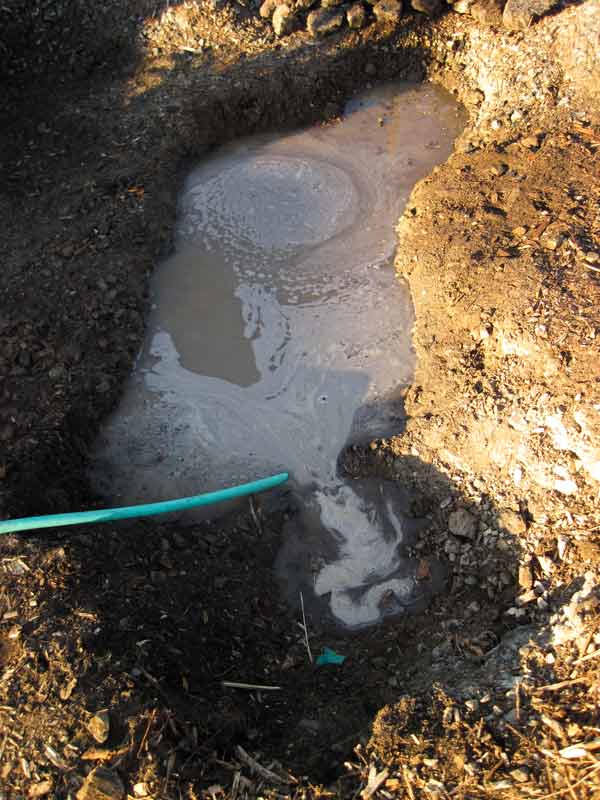
 A hole is dug and filled with water for further digging.
 Lake Mead and the Hoover Dam come to mind as water fills Garter Snake Ravine.
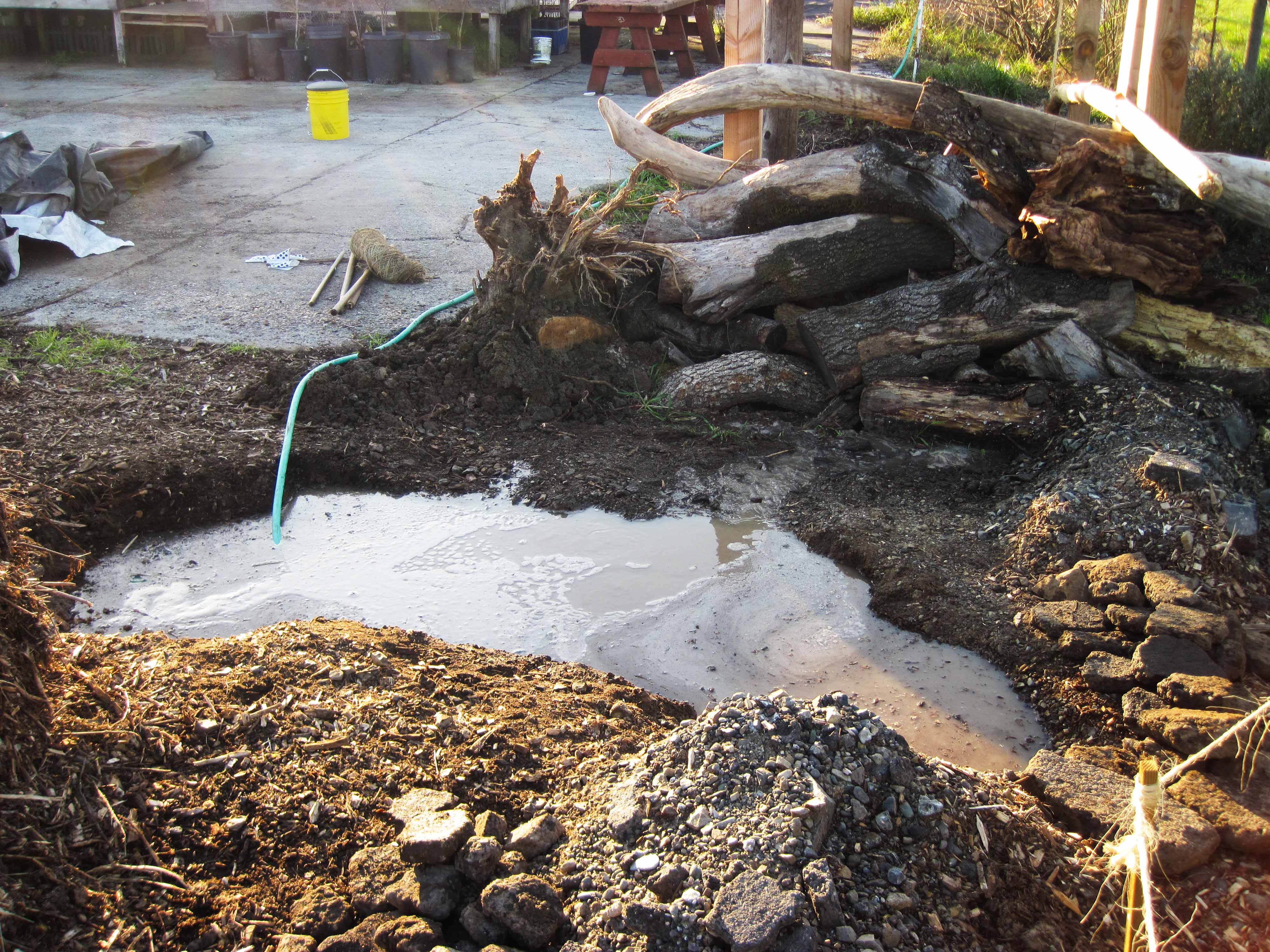 Garter Snake Ravine, using hose water during this installation trial run, drains into and under Log Pile Apartments. Good thing that the Apartments’ rents are stabilized now that the habitat installation will have running water.
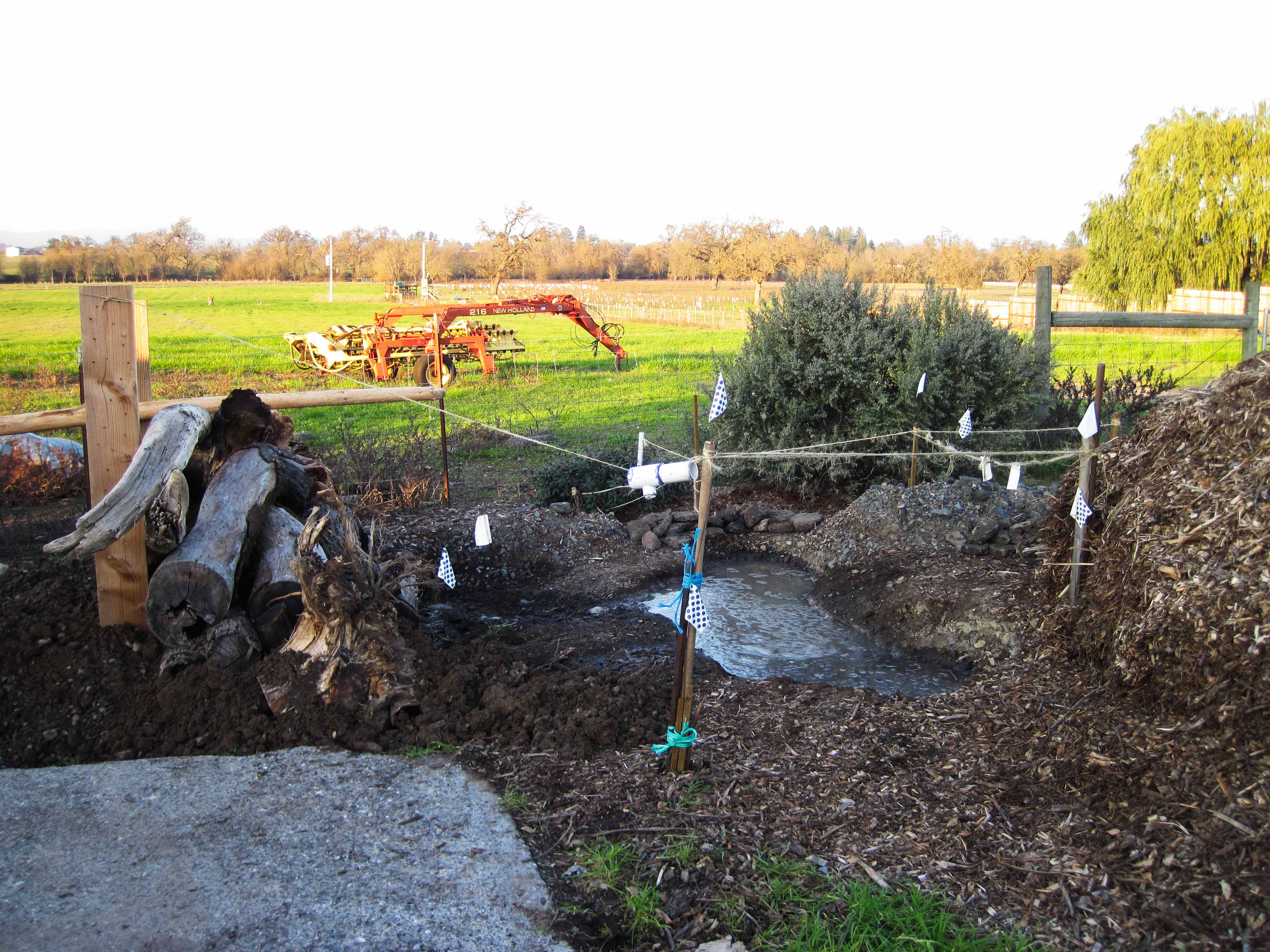 I will be back to finalize the prep for Garter Snake Ravine next week. Please do not fall in!
Sunny Galbraith’s Biology students from Orchard View School will be here in two weeks to complete the wildlife habitat installation. At that time, we will install an owl perch, a hugelkultur, a water-collecting soil berm, and a many headed creature writhing out of Garter Snake Ravine.
Enjoy your habitat installations and outdoor classrooms. Habitat it!
Tony